Criminal Justice Courses · AI Law Professor
Why Are Most Criminal Cases Resolved Through Plea Bargains?
While movies focus on dramatic courtroom trials, reality is different. Most criminal cases conclude through plea bargains. Learn the surprising history, mechanics, and legal necessity behind this dominant method of resolving criminal prosecutions today.
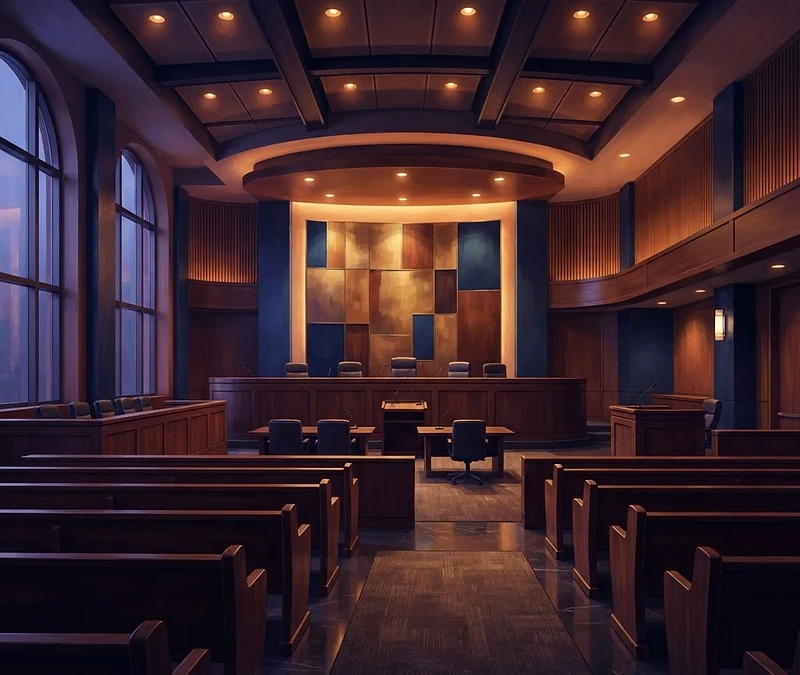
Empty courtrooms are common today because most legal resolutions happen through private negotiations rather than public trials.
2026-10-26
Short answer
Most criminal cases are resolved through plea bargains because the judicial system lacks the resources to hold a full jury trial for every defendant. By agreeing to plead guilty in exchange for reduced charges or shorter sentences, defendants avoid the risk of harsher penalties, while prosecutors ensure a certain conviction.
Key facts
- Over 90 percent of criminal cases in the United States are resolved through plea bargains.
- Plea bargains serve as an essential efficiency tool to prevent the total backlog of court dockets.
- Defendants often accept plea deals to avoid the risk of receiving maximum sentences after a trial.
- The trial penalty refers to the harsher sentences prosecutors may threaten if a defendant chooses a jury trial.
- Plea negotiations shift the focus of the justice system from courtroom adversarial debate to administrative settlement.
Why do most criminal cases avoid the courtroom entirely?
The vast majority of criminal cases, often estimated at over 90 percent in federal and state systems, conclude with a plea bargain rather than a trial. This phenomenon exists because the sheer volume of cases filed daily would paralyze the American court system if every single defendant demanded a trial. Judges, courtrooms, and jury pools are finite resources, and the plea bargain acts as a necessary efficiency mechanism to keep the gears of justice turning.
How does a plea bargain actually benefit a defendant?
While it might seem counterintuitive to admit guilt to receive punishment, a plea bargain often provides a defendant with certainty in an otherwise unpredictable environment. Trials carry the risk of a maximum sentence if a jury finds the defendant guilty, whereas a negotiated plea often involves an agreement for a significantly reduced sentence or the dropping of specific charges. This allows both parties to avoid the exhaustion of time and the financial costs associated with a full criminal trial.
Is there a dark side to the widespread use of plea bargaining?
Critics argue that the reliance on plea bargaining can coerce innocent individuals into admitting guilt just to avoid the gamble of a trial where they might face decades in prison. This pressure is often called the trial penalty, where prosecutors threaten harsher outcomes if a defendant forces the state to go through the expense of a trial. Because the system is so heavily tilted toward efficiency, there are concerns that the traditional adversarial process, designed to discover the objective truth through evidence and cross-examination, is being replaced by administrative negotiation. While this helps clear backlogs, it fundamentally changes the nature of the constitutional right to a fair trial by jury, as the incentive to plead guilty becomes so strong that exercising one's rights can feel like an unaffordable luxury.
Despite these controversies, the plea bargain remains the bedrock of the modern legal system, acting as a functional necessity that balances the need for speed against the complexities of due process. Understanding how these negotiations occur is essential for anyone looking to enter the legal field or simply understand why their local courthouse rarely sees a high-profile trial.


Feature 1
Mastering The Mechanics of Criminal Law
Understand the complex world of legal procedure, from the initial arrest to final sentencing. Our AI Law Professor course breaks down how real cases move through the system, giving you a clear view of the strategies lawyers use behind closed doors. Stop wondering about the process and start learning the rules that govern the justice system today.
Join AI Law Professor today
Feature 2
Learn Law Without the Law School Price
Gain high-level insights into criminal justice without the burden of massive tuition fees. Our monthly subscription gives you full access to specialized AI-taught lessons that make legal theory accessible and engaging. Elevate your knowledge at your own pace.
Start your criminal justice courseFeature 3
Decode the Hidden Rules of Justice
Discover the incentives and pressures that shape legal outcomes every day. Our AI-driven curriculum provides deep dives into why the system operates the way it does, ensuring you get the most accurate and up-to-date information on criminal justice trends and essential legal principles.




Frequently asked questions
- Can a judge reject a plea bargain?
- Yes, a judge has the final authority to accept or reject a plea agreement. They will review the facts to ensure the defendant is entering the plea voluntarily and that the agreement is consistent with legal standards and public interest.
- What is an Alford plea?
- An Alford plea occurs when a defendant enters a guilty plea while simultaneously maintaining their innocence. They acknowledge that the prosecution has enough evidence to likely secure a conviction at trial, allowing them to accept a deal without admitting to the specific acts.
- Are plea bargains used in other countries?
- While plea bargaining is a hallmark of the United States, many civil law countries rely more on investigative judges. However, countries like Italy and Germany have adopted versions of plea bargaining to manage their own caseloads in recent years.