

Criminal Justice Courses · AI Intelligence Analyst Professor
How Does Forensics Distinguish Between Similar Substances?
Forensic science uses sophisticated techniques to separate look-alike substances. Discover the methods detectives use to ensure that the evidence presented in a courtroom is scientifically accurate and beyond reasonable doubt.
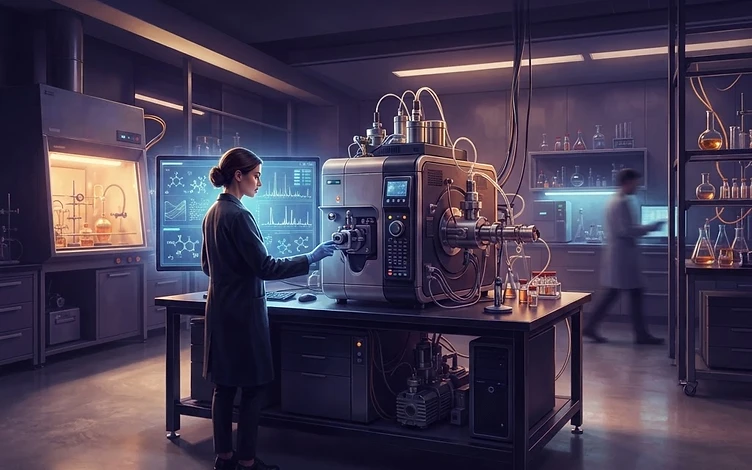
A modern forensic laboratory uses advanced mass spectrometry to analyze evidence, ensuring that chemical identifications are precise and legally defensible.
2026-10-26
Short answer
Forensic scientists distinguish between chemically similar substances using techniques like gas chromatography and mass spectrometry. By separating a complex mixture into individual components and then measuring the mass-to-charge ratio of the resulting molecules, experts create a chemical fingerprint. This allows them to identify specific substances, even when they appear identical to the naked eye.
Key facts
- Forensic chemists use gas chromatography to separate mixtures into individual chemical components before analysis.
- Mass spectrometry identifies molecules by measuring their mass-to-charge ratio in an electromagnetic field.
- Look-alike substances often require molecular identification because visual inspection is unreliable for evidence.
- Digital databases allow forensic experts to compare unknown samples against thousands of known chemical fingerprints.
- Modern forensic technology significantly reduces human error during the processing of complex crime scene evidence.
Why do look-alike substances challenge forensic experts?
Forensic experts must deal with substances that possess near-identical physical appearances but vastly different molecular compositions. Without precise testing, a harmless powder could easily be mistaken for a dangerous illicit drug, leading to potentially disastrous legal consequences.
The primary challenge lies in the sheer variety of chemical compounds that exhibit similar textures, colors, and densities. For instance, many synthetic drugs are designed to mimic the effects of common controlled substances while altering their chemical structure just enough to evade initial detection. To combat this, investigators rely on rigorous scientific protocols that bypass visual inspection entirely, focusing instead on the intrinsic chemical properties that define a specific substance at the molecular level.
How does mass spectrometry identify unknown samples?
Mass spectrometry functions by ionizing molecules and accelerating them through an electromagnetic field to determine their exact molecular weight. This data is then compared against vast databases of known chemical structures to provide a positive identification of the material in question.
This method is considered the gold standard in forensic chemistry because it provides a high level of specificity that subjective human observation cannot achieve. Once the sample is vaporized and broken down into charged particles, the instrument tracks how these particles deflect based on their mass-to-charge ratio. The resulting pattern, known as a mass spectrum, acts as a unique signature for the substance. This process ensures that forensic analysts can confidently testify in court regarding the exact identity of evidence found at a crime scene.
What role does technology play in modern criminal investigations?
Advanced technology allows for real-time data analysis and increased accuracy in crime scene processing, significantly reducing the margin for human error. These tools provide investigators with reliable evidence that stands up to the intense scrutiny of modern legal systems.
The integration of sophisticated analytical software into the justice system has transformed how evidence is collected and processed. Rather than relying on outdated manual tests, analysts now use automated systems that process multiple samples simultaneously with minimal contamination risk. This technological evolution does not just speed up the investigative process; it improves the reliability of the entire justice chain. As chemical detection methods continue to evolve, so too must the expertise of the professionals who operate them, ensuring that the intersection of science and law remains both fair and evidence-based.


Feature 1
Master Modern Criminal Justice Analysis
Understanding the technology behind forensic evidence is just one part of the AI Intelligence Analyst Professor course. We teach you how to evaluate data, understand investigative methodologies, and apply modern analytical techniques to complex criminal justice scenarios. Whether you are a student or a professional, our curriculum helps you build the skills necessary to interpret evidence effectively.
Join AI Intelligence Analyst Professor
Feature 2
Learn Forensic Science Principles Today
Our course provides a deep dive into the science that powers modern investigations. By learning these foundational principles, you gain a better understanding of how investigative conclusions are reached and reported within the justice system.
Enroll in justice coursesFeature 3
Elevate Your Career with AI
Gain an edge in your field by learning to use AI-driven tools for data analysis. The AI Intelligence Analyst Professor course bridges the gap between traditional forensic knowledge and the future of criminal justice technology, preparing you for the challenges of tomorrow's investigative landscape.


Frequently asked questions
- Can forensic scientists identify substances with 100% accuracy?
- While forensic techniques like mass spectrometry are extremely reliable, they are always subject to rigorous validation. Courts require these tests to be performed by qualified experts following standardized protocols to maintain high levels of scientific certainty.
- Are field test kits used by police as accurate as lab equipment?
- Field test kits are useful for preliminary screenings at a scene, but they are generally less accurate than lab equipment. They are designed for quick presumptive results, while lab instruments provide conclusive, court-admissible identification.
- Why is the chain of custody important in forensics?
- The chain of custody is a legal document that records the movement and handling of evidence from collection to courtroom. It ensures that the evidence remains untainted and authentic throughout the entire investigative process.