Criminal Justice Courses · AI Criminal Justice Professor
How Does Forensics Actually Use Insects to Solve Crimes?
Ever wondered how tiny insects help solve major crimes? Forensic entomology uses the predictable life cycles of necrophagous insects to pinpoint the exact time of death in complex criminal investigations.
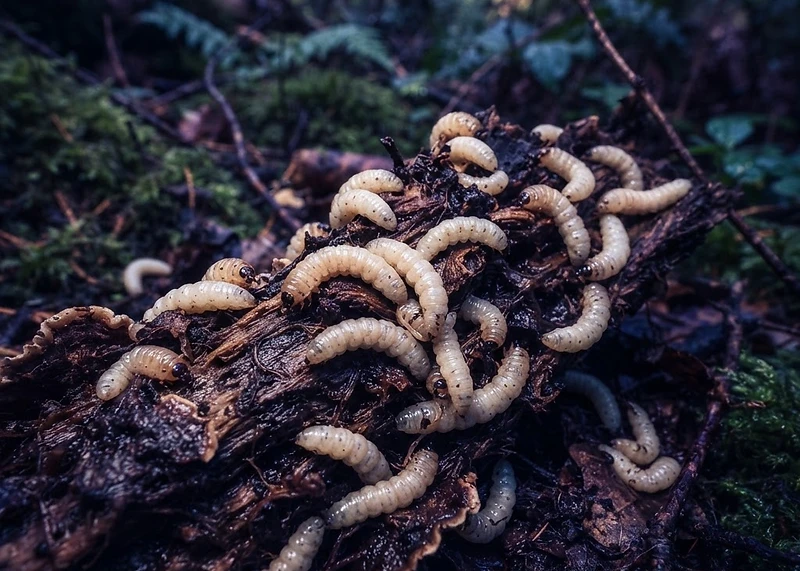
Blowfly larvae are the primary focus of forensic entomologists because their developmental stages serve as a biological clock for crime scenes.
2026-10-25
Short answer
Forensic entomologists estimate the time of death, or post-mortem interval, by analyzing the species and developmental stages of insects found on a body. Because insects like blowflies arrive at a corpse within minutes and follow a predictable life cycle based on temperature, their presence provides a biological clock for investigators.
Key facts
- Blowflies can detect a body within minutes of death using their sensitive smell.
- Forensic entomologists use insect developmental stages to estimate the time of death.
- Insects are ectothermic, meaning their growth speed relies heavily on ambient temperature.
- Accumulated degree hours help experts adjust for different climate and weather conditions.
- The succession of different insect species provides a timeline for long-term decomposition.
How do insects determine the time of death?
Forensic entomologists determine the time of death by calculating the developmental age of insects found on human remains. These scientists observe the specific life stages of insects to create a timeline that corresponds to the period elapsed since death occurred.
Insects, particularly blowflies, are often the first to arrive at a crime scene. Their arrival is so predictable that they can appear within minutes of death. As they lay eggs, these eggs develop into larvae, then pupae, and finally into adult flies. By measuring the size and developmental stage of these larvae, experts can work backward. If a larva is in its second instar stage and local temperature data is known, the expert can accurately estimate when the first eggs were laid, providing a reliable window for the time of death.
Why is the environment so important to the calculation?
Environmental variables like ambient temperature and humidity drastically alter the rate at which insects develop, making them critical factors in forensic accuracy. Investigators must reconcile insect data with local weather logs to avoid miscalculating the post-mortem interval.
Insects are ectothermic, meaning their internal body temperature is dictated by their surroundings. If a body is found in a cold environment, insect development slows down significantly compared to a warm, humid environment. Forensic professionals use a measurement called accumulated degree hours to quantify the total heat energy an insect has been exposed to. By comparing this total to developmental models, they adjust their estimates to account for seasonal variations or indoor versus outdoor crime scenes.
Failure to factor in these environmental nuances can lead to an error of several days in an investigation.
Which insects are most useful for forensic analysis?
While many species visit a scene, the blowfly family, known as Calliphoridae, is the most valuable for investigators due to their rapid colonization behavior. Other insects like beetles and ants also play roles, though they typically arrive later in the decomposition process.
Different insects follow a specific wave of succession on a decomposing body. Initial colonizers like blowflies are replaced by cheese flies, and eventually, various beetle species arrive to break down tougher tissues. This biological succession creates a timeline that helps investigators understand how long a body has been exposed. Forensic entomology is not just about the first arrivals; it is about mapping the entire sequence of insect colonization to verify the timeline of a crime with biological precision.

Feature 1
Master Forensic Science Principles
Understanding how biology intersects with the legal system is essential for any modern investigator. In our AI Criminal Justice Professor course, we break down these complex forensic concepts into digestible, expert-led lessons. You will explore how physical evidence and biological data create an undeniable picture of the truth. Whether you are a student or a professional, you will gain a deeper appreciation for the science behind the gavel.
Join the Criminal Justice course

Feature 2
Learn Forensic Science with AI
Our course uses cutting-edge AI to personalize your learning path, ensuring you master forensic methodologies effectively. You will engage with interactive scenarios that mimic real-world criminal justice challenges, helping you apply theoretical knowledge to complex cases. Subscribe today to start learning for just $5 per month.
Subscribe for five dollarsFeature 3
Analyze Evidence Like a Pro
From entomology to DNA analysis, our modules cover the vital sciences that form the backbone of criminal investigations. Gain the analytical skills needed to evaluate evidence and understand the investigative process. Our AI-driven platform adapts to your pace, providing you with a tailored educational experience that fits your lifestyle perfectly.



Frequently asked questions
- Can insects be used if a body is found indoors?
- Yes, but it is more complex. While insects still find indoor remains, investigators must account for barriers like windows or doors, which might delay arrival. They also consider climate control systems that keep indoor temperatures different from outside.
- What is the post-mortem interval?
- The post-mortem interval, or PMI, is the estimated time that has elapsed since a person has died. Forensic entomology is one of the most reliable scientific methods for calculating this period during the early stages of decomposition.
- Do all insects help in crime solving?
- Not all insects are useful. Forensic entomologists focus specifically on necrophagous species that feed on decaying tissue. Other common house insects may arrive by coincidence and are often ignored to ensure the accuracy of the investigation.