
AI Professor Courses
How Do I Use AI to Master Complex Statistics Without Getting Lost in the Mathematical Fog?
Mastering statistics through AI-driven personalized learning paths and instant 24/7 conceptual explanations.
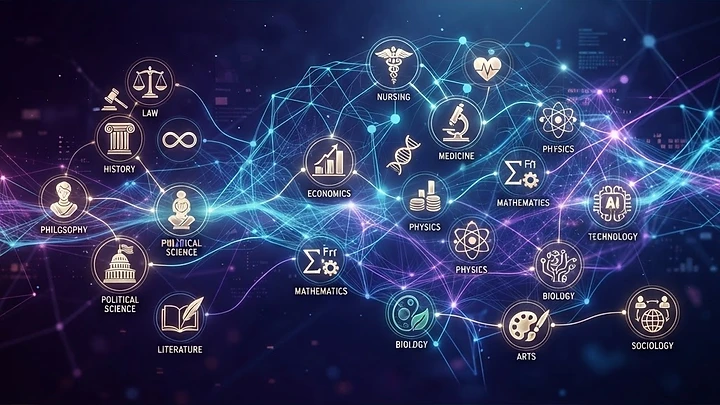
Personalized AI tutoring interfaces help students visualize complex statistical models, turning abstract formulas into clear, navigable data structures.
Direct answer: Mastering statistics requires moving beyond rote memorization of formulas toward conceptual fluency. By utilizing AI Professor Courses, you gain access to 24/7 personalized tutoring across over 80 subjects including Math and Sciences. Starting at $5/month, our platform simplifies complex statistical models into actionable insights, helping you break through the mathematical fog immediately.
How can I visualize statistical concepts to avoid getting lost in the math?
Visualization is often the bridge between abstract algebraic notation and genuine conceptual understanding. When you encounter a dense formula for standard deviation or a complex Bayesian theorem, the initial urge is to memorize the sequence of operations. However, statistics is fundamentally the study of patterns and variability, not just arithmetic. An AI-powered tutor acts as a visual partner, breaking down these formulas into their constituent components.
Instead of simply providing the result, an AI tutor can guide you through the geometric or probabilistic interpretation of a data distribution. For example, when studying the Normal Distribution, rather than just calculating Z-scores, you can prompt an AI to explain how changing the mean or standard deviation shifts the curve on a bell-shaped plot. This iterative process of visual reinforcement ensures that you understand why a result emerges, rather than simply accepting that it did. At AI Professor Courses, we prioritize this transition from calculation to comprehension, offering structured guidance in Math, Sciences, and more, all designed to make the invisible visible.
By treating the AI as an exploratory tool—asking it to explain the 'why' behind the 'what'—you engage in a process of metacognitive calibration. This means you are constantly evaluating your own grasp of the material as you progress. Instead of drowning in symbols, you begin to see the underlying architecture of statistical inference, which is the true goal of any rigorous quantitative education.
Why is iterative feedback better than traditional static textbooks for statistics?
Static textbooks are limited by their linear progression, whereas AI tutoring provides a non-linear, responsive environment for mastering intricate concepts. When you study from a traditional text, if you do not understand a specific step in a proof, you are often stuck until you find a professor or a peer. In contrast, AI offers an instantaneous, granular feedback loop that keeps you from falling behind. You can ask an AI to simplify a concept like 'Type II Error' as many times as necessary, using different analogies until the idea clicks.
This dynamic engagement is critical because statistics often requires building blocks of knowledge; if you miss a foundational piece, the rest of the course becomes incomprehensible. AI platforms facilitate this by allowing for persistent, low-stakes practice. You can generate hundreds of problems covering a specific statistical hurdle, such as ANOVA (Analysis of Variance) tests, and receive immediate corrections on your logic rather than just your final answer. This helps identify the specific 'fog' you are experiencing—whether it is a misunderstanding of the null hypothesis or an error in setting up the independent variables.
Our platform supports this learning model by providing a deep repository of knowledge across subjects like Nursing, Law, Criminal Justice, History, and beyond. This cross-disciplinary approach allows you to see how statistical thinking applies to different fields, transforming it from an isolated math chore into a universal tool for analytical inquiry and decision-making.
How does 24/7 AI-driven support eliminate the friction of study schedules?
The 'scheduling grind' is a major barrier to academic success, especially when studying subjects as demanding as advanced statistics. Many students experience the 'midnight wall,' where they attempt to solve a problem long after their last class, only to find themselves stuck with nowhere to turn. AI tutoring eliminates the reliance on limited office hours or expensive private tutors, providing a constant, reliable academic companion. This 24/7 accessibility is not merely about convenience; it is about cognitive momentum.
When you are on a roll and finally begin to understand the nuances of regression analysis, having to stop because a tutor is unavailable or because a library is closing is detrimental to your learning flow. AI allows you to maintain that momentum regardless of the hour. Furthermore, the cost-effectiveness of an AI platform like AI Professor Courses—starting at just $5/month—democratizes access to high-quality academic support. Whether you are a college student navigating a complex curriculum or a lifelong learner curious about data science, the friction of finding a qualified human tutor is removed.
Consider the difference in the learning experience:
- Human Tutors: Often limited by geography, high costs, and strictly defined appointment windows.
- AI Tutors: Available globally, on-demand, and focused on specific student-defined inquiries.
By leveraging this model, you ensure that your learning is dictated by your own needs and your own curiosity rather than the logistics of scheduling. You gain the autonomy to study when your brain is most receptive, which is a major advantage in retaining complex statistical concepts. Whether you are diving into the history of statistical development or the application of data science in nursing and law, the ability to get immediate help ensures that your academic journey remains fluid, continuous, and effectively supported throughout your entire learning process.
Discuss this article
AI study companion
Ask about the core concepts, get a plain-English summary, or have any idea in this article unpacked. The companion reads the article itself before it answers.