
AI Professor Courses
How Do I Use AI to Master Complex Nursing Pharmacology Without Feeling Overwhelmed?
A comprehensive guide on leveraging AI-driven study strategies and 24/7 tutoring to navigate the dense, high-stakes subject of nursing pharmacology.
Utilizing digital tools to visualize complex pharmacological pathways allows nursing students to bridge the gap between theory and clinical application.
Direct answer: Mastering nursing pharmacology requires connecting physiological mechanisms to drug classifications, a process AI excels at accelerating. AI Professor Courses offers over 80 courses across fields like Nursing, Sciences, and Law, providing 24/7 instant tutoring to break down complex pharmacodynamics and drug interactions, starting at just $5 per month for constant support.
How can AI turn pharmacology memorization into conceptual understanding?
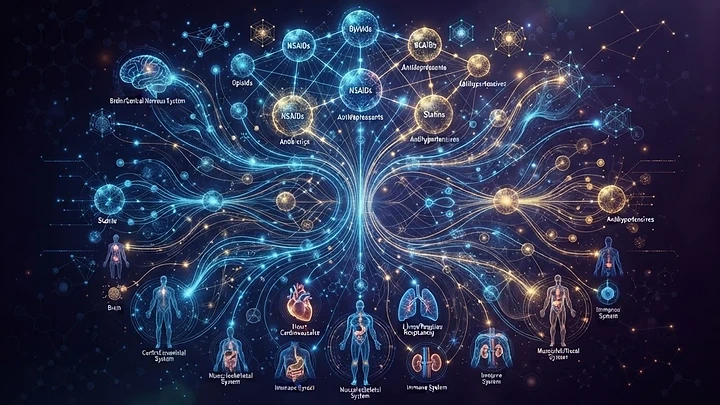
AI functions as an active recall engine, shifting the burden of learning from passive reading to dynamic engagement, which is essential for the high-density nature of pharmacology. Instead of rote memorization of thousands of drug names and side effects, you can use AI to build a structural mental map where you categorize drugs by their mechanism of action rather than just their generic names.
When you approach a drug class like beta-blockers, a standard textbook might provide a list of medications and a long list of adverse effects. An AI tutor, by contrast, can ask you to explain the physiological pathway first. It can prompt you with scenarios: "What happens if a patient with asthma receives a non-selective beta-blocker?" This moves your study session from a passive review to a clinical simulation. By utilizing AI Professor Courses, you gain access to structured modules that synthesize these complex interdependencies across various nursing disciplines including:
- Advanced Medical-Surgical Nursing
- Pediatric and Neonatal Pharmacology
- Critical Care Pathophysiology
- Chronic Disease Management
- Evidence-Based Nursing Practice
The benefit of this approach is the creation of "connective tissue" in your brain. Once you understand the underlying physiology—for example, how alpha and beta receptors function in the autonomic nervous system—the drug interactions become logical consequences rather than arbitrary facts to be memorized. AI tools can generate infinite permutations of clinical vignettes, allowing you to test your understanding of drug-to-drug interactions in real-time. This iterative feedback loop is significantly more efficient than checking an answer key in a back-of-book appendix.
By spending fifteen minutes with an AI tutor, you can simulate a high-stress clinical encounter, identify the specific pharmacological knowledge gap, and refine your understanding immediately, ensuring that you are building on a foundation of comprehension rather than fragile, short-term memorization.
Can AI effectively simulate the clinical decision-making required for safe medication administration?
AI simulations provide a safe, low-stakes environment to practice the critical thinking required for safe medication administration, helping you develop the "nursing eye" for identifying potential contraindications. In traditional settings, students often lack the opportunity to see how their drug knowledge translates into patient safety until they are in a high-pressure clinical or exam environment. AI acts as a surrogate for clinical faculty, allowing you to run hundreds of "what-if" scenarios without risking patient safety or needing a dedicated human supervisor available at 3:00 AM.
Consider the process of reconciling medications for a geriatric patient with comorbidities. An AI tutor can present a patient profile with a complex list of medications—antihypertensives, anticoagulants, and diuretics—and ask you to identify the priority assessment. If you miss a sign of digoxin toxicity, the AI can immediately guide you through the physiological indicators of that toxicity, such as visual disturbances or bradycardia, and explain why your initial intervention was misplaced. This immediate metacognitive calibration is a major advantage of the AI Professor Courses platform.
You are not just getting an answer; you are training your internal logic to spot patterns.
This form of training is fundamentally different from traditional multiple-choice prep. It forces you to construct your argument for why a specific drug is appropriate, which is the exact process required during the NCLEX or hospital rounds. By engaging with these simulations daily, you transition from viewing pharmacology as an isolated subject to viewing it as a core component of patient advocacy. The goal is to reach a level of fluency where the "why" behind the pharmacology is as clear as the name of the drug.
AI allows this by providing consistent, objective feedback that adapts to your learning speed, ensuring you master the foundational dosage calculations and therapeutic ranges before moving to more complex polypharmacy cases.
Why is 24/7 AI-driven support superior to traditional study groups for dense subjects?
While study groups can offer social support, they often suffer from "collective ignorance," where groups struggle to resolve complex pharmacological contradictions, whereas 24/7 AI tutoring offers instant, accurate verification of concepts at any hour. The primary friction in nursing school is time; students are often juggling clinical rotations, lab hours, and personal responsibilities, making it nearly impossible to coordinate schedules for effective group study. AI removes this friction, providing a tutor that never tires, never gets frustrated, and is always ready to dive deep into a specific mechanism of action.
Contrast the two modes of study:
- Study Groups: Limited to the shared knowledge of the members, prone to distraction, requires scheduling, and often leads to gaps in technical accuracy.
- AI Tutoring: Available 24/7, maintains total objectivity, provides immediate feedback, customizes the complexity based on your current knowledge, and spans across all academic domains.
When you use the AI Professor Courses system, you gain access to a curated intelligence that understands the specific pedagogical framework of nursing pharmacology. Whether you are struggling with the nuances of pharmacokinetics—how the body absorbs, distributes, metabolizes, and excretes a drug—or the specificities of autonomic nervous system stimulants, the AI can provide explanations at varying levels of depth. It can simplify a concept for a quick review or expand upon the biochemical pathway for a deeper understanding. This agility is vital when your curriculum covers several drug classes per week.
You can essentially have a "private tutor" for every hour of your study session. By replacing the hit-or-miss nature of study groups with an always-on, high-fidelity AI tutor, you maximize every minute of study time, ensuring that your preparation for clinical assessments is consistent, deep, and reflective of modern, evidence-based nursing standards.

Discuss this article
AI study companion
Ask about the core concepts, get a plain-English summary, or have any idea in this article unpacked. The companion reads the article itself before it answers.