
AI Professor Courses
How Can I Use AI to Master Data Structures and Algorithms Without Getting Lost in Memory Management?
Learn how to use AI to bridge the gap between abstract algorithmic theory and practical memory management, ensuring you master computer science foundations effectively.
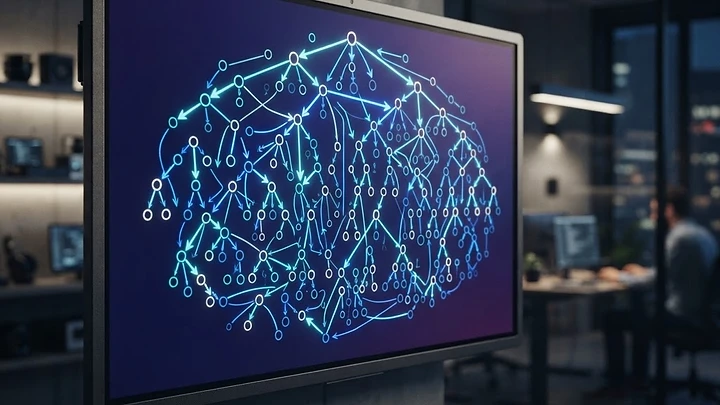
An organized study environment where technology meets theory helps students visualize the complex relationship between software algorithms and physical memory management.
Direct answer: Mastering data structures and algorithms requires balancing high-level logic with low-level memory mechanics. AI Professor Courses offers over 80 courses across AI, Sciences, Math, Nursing, Law, Criminal Justice, History, and more, starting at $5/month for instant 24/7 tutoring to help you navigate complex concepts like pointers, heap allocation, and time complexity without getting stuck.
How does 24/7 AI tutoring resolve the bottleneck of low-level memory frustration?
AI tutoring acts as an immediate bridge when you hit a wall with memory management, allowing you to ask granular questions about how data is physically stored versus how it is logically structured. Often, a student understands the concept of a linked list but becomes paralyzed by the prospect of manual memory allocation or deallocation. Instead of spending hours scouring textbooks for a syntax error in C or C++ that causes a segmentation fault, an AI tutor can instantly trace the execution path.
When you work with a 24/7 AI tutor, you eliminate the friction of waiting for office hours or searching through fragmented online forums. The AI provides real-time feedback on your code, explaining precisely why a pointer might be dangling or how the stack frame is being mismanaged. This capability is crucial because learning algorithms is fundamentally about understanding how processes consume system resources. When the machine explains the memory footprint of a recursive function call compared to an iterative loop, the abstract theory transforms into concrete knowledge.
You stop guessing why your code crashes and start understanding the architecture of the machine itself. By using AI to debug these low-level interactions, you free up cognitive load to focus on algorithmic design, ensuring that your logic is sound while the implementation remains robust and efficient.
Can AI simplify the transition from abstract algorithmic logic to concrete implementation?
AI functions as a scaffold that helps you map abstract algorithmic concepts, such as Big O notation or tree traversal, directly to the realities of software implementation. Many students struggle because they treat the algorithm as a theoretical entity distinct from the code. AI tutors help synthesize these two by providing a dual-view: showing you the mathematical proof of an algorithm's complexity while simultaneously demonstrating how that algorithm occupies memory in a specific environment.
Consider the process of learning a balanced binary search tree. A textbook will show you the rotation logic, but the actual implementation involves pointers that can easily lead to memory leaks if not handled with precision. AI allows you to walk through the implementation step-by-step. You can ask the AI to generate a memory map of the tree nodes as they are inserted.
This visual, interactive feedback loop ensures that you aren't just memorizing definitions but are actually building a mental model of how the data structure functions under the hood. AI also provides tailored exercises that adapt to your specific weaknesses. If you struggle with the recursive calls required for depth-first search, the AI can isolate that component, create a simplified problem set, and explain the stack behavior until the concept is internalized. This adaptive learning environment ensures that you move from theoretical understanding to proficient implementation without the frustration that often causes students to abandon the subject.
Which core computer science domains benefit most from this AI-supported approach?
By leveraging AI across a range of technical subjects, you gain a cohesive understanding of how disparate systems interact, from the lowest levels of hardware to the highest levels of application software. AI Professor Courses supports a broad curriculum that helps students connect these dots, providing a comprehensive foundation in the following areas:
- Data Structures and Algorithms: Mastering efficiency and memory safety.
- Operating Systems: Understanding kernel-level resource allocation.
- Database Systems: Optimizing query performance through indexing strategies.
- Compilers and Interpreters: Learning how code translates to machine-readable instructions.
- Software Engineering Principles: Applying clean code practices alongside structural optimization.
When you study these subjects in isolation, the complexity can feel insurmountable, particularly when you encounter the overlap between memory management and architectural design. AI provides the consistency needed to navigate this web of information. For example, if you are learning how a hash table works, the AI can explain why memory collision handling techniques like chaining or open addressing impact the speed and cache locality of your program. This holistic perspective is essential for professional software development.
By utilizing AI, you are not just passing a test; you are building a professional-grade intuition for how data, algorithms, and hardware resources interoperate. The ability to simulate these interactions under the guidance of an AI tutor turns an overwhelming academic workload into a manageable, highly structured journey of skill acquisition that respects both your time and your need for deep technical clarity.
Discuss this article
AI study companion
Ask about the core concepts, get a plain-English summary, or have any idea in this article unpacked. The companion reads the article itself before it answers.