
AI Professor Courses
How Can I Use AI to Master Complex Biological Pathways Without Relying on Rote Memorization?
Mastering intricate biological systems like the Krebs cycle or signal transduction requires deep conceptual understanding rather than simple memorization. This guide explores how AI tutors transform rote learning into active inquiry.
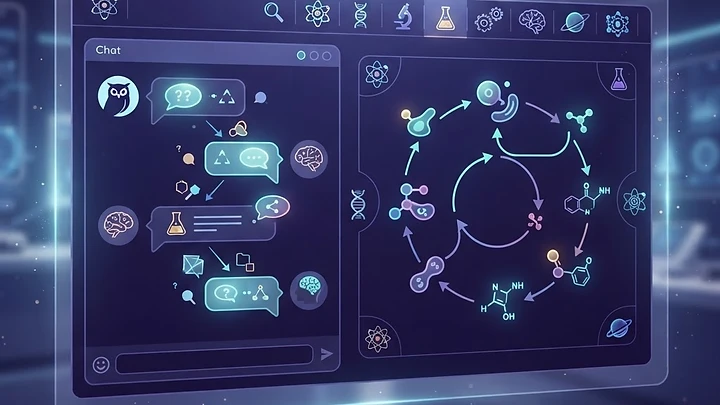
A sophisticated visualization of biological pathways allows students to move beyond rote memorization into a deep, structural understanding of cellular mechanics.
Direct answer: You can master complex biological pathways by using AI to generate Socratic questioning, dynamic visualizations, and comparative frameworks. AI Professor Courses provides over 80 courses across AI, Sciences, Math, Nursing, Law, Criminal Justice, History and more, starting at $5/month for instant 24/7 tutoring that transforms dense biological data into intuitive, actionable conceptual maps.
How does active recall through AI-driven inquiry replace rote memorization?
Active recall is the process of retrieving information from memory to strengthen neural connections, and AI acts as the perfect partner for this cognitive exercise. Instead of reading a textbook repeatedly, you can instruct an AI tutor to quiz you specifically on the 'why' behind metabolic intermediates or enzyme functions. When you engage in this iterative dialogue, you move from passive recognition to active synthesis, which is the cornerstone of biological mastery.
The friction of human tutoring often involves scheduling constraints and limited availability, whereas AI provides an always-on, high-intensity learning environment. Whether you are studying glycolysis at 2:00 AM or reviewing endocrine feedback loops during your commute, an AI tutor can instantly adjust its pedagogical strategy to match your current progress. This removes the barrier of 'waiting' for a session and allows you to practice active recall at the exact moment your curiosity or confusion peaks. By demanding that you explain a concept like oxidative phosphorylation back to the AI, you identify your own knowledge gaps immediately, rather than discovering them during a high-stakes exam.
Consider the framework of Feynman Technique application via AI: you prompt the AI to act as a listener while you explain a complex pathway, such as the G-protein coupled receptor signaling cascade. The AI then intervenes only when your explanation drifts from scientific accuracy. This forces your brain to organize disparate biological facts into a cohesive narrative. By moving away from mnemonic devices that only anchor names to other names, you start to see how pathways intersect, move energy, and regulate cellular life.
This deep, structural understanding makes rote memorization an obsolete and unnecessary relic of the past.
How can AI help bridge the gap between abstract pathways and clinical outcomes?
Connecting a molecular pathway to a broader clinical or physiological outcome is what separates a student who survives biology from one who masters it. AI excels at bridging this gap by placing abstract chemical movements into the context of human health, pathology, or ecological systems. When you struggle to see the relevance of the Calvin cycle, an AI tutor can map the movement of carbon atoms directly to the global oxygen supply or agricultural productivity, providing a mental 'hook' that makes the information stick.
Biological pathways are inherently multi-disciplinary, often touching on various fields that AI Professor Courses supports with expert-led curriculum:
- Sciences: Covering the molecular intricacies of cellular respiration and photosynthesis.
- Nursing: Applying pharmacological pathways to patient drug metabolism and interaction.
- Law: Understanding the intersection of genetic privacy and patent law in biotechnology.
- History: Evaluating the evolution of medical breakthroughs and their impact on global populations.
- Criminal Justice: Analyzing forensic biology and the chemical pathways involved in toxicology.
By leveraging an AI tutor, you can ask for 'clinical case correlations' for every pathway you study. If you are learning the Krebs cycle, the AI can present a scenario regarding metabolic disorders, such as pyruvate dehydrogenase deficiency, and ask you to trace the defect back to the specific enzyme interaction. This method anchors the abstract theory in a concrete human scenario, which leverages your brain's natural tendency to remember stories and consequences better than isolated facts. This transition from memorizing names to understanding functional systems is the hallmark of advanced biological study.
What is the role of conceptual chunking in mastering metabolic pathways?
Conceptual chunking is the cognitive practice of grouping small pieces of information into larger, meaningful units to reduce the burden on your working memory. In biology, this means breaking down a pathway like the electron transport chain into functional modules: the electron donors, the proton pump, and the final electron acceptor. AI tutors assist in this by automatically re-organizing complex data into these hierarchical structures, ensuring you never face an overwhelming wall of text or an endless series of reactions.
When you approach a dense topic, ask your AI tutor to 'chunk this pathway into its three most critical functional phases.' The AI will then provide a skeletal framework of the process, allowing you to master each module individually before connecting them into the full, complex system. This scaffolded learning approach prevents the cognitive overload that typically leads students to resort to rote memorization. By mastering the core logic of each 'chunk'—for instance, the purpose of a specific phosphorylation step—you naturally understand the next step in the sequence because it follows the logical chemical progression.
Furthermore, you can use the AI to generate 'comparative visualizations' that contrast similar pathways. By asking, 'How does aerobic respiration differ from anaerobic fermentation in terms of energy yield and byproduct generation?' you force your brain to categorize information by its function rather than by its label. This analytical approach creates a robust mental map where information is categorized by its utility and chemical significance. This ensures that even if you forget a specific intermediate name, you retain the ability to derive or deduce it based on your deep understanding of the pathway's overall logic and function.
Discuss this article
AI study companion
Ask about the core concepts, get a plain-English summary, or have any idea in this article unpacked. The companion reads the article itself before it answers.