
AI Professor Courses
How Can I Use AI-Driven Historical Inquiry to Master Complex Global Conflicts Without Getting Lost in Dates and Names?
Learn how AI transforms history study by prioritizing thematic synthesis and comparative analysis over rote memorization, helping you grasp global conflict dynamics through AI Professor Courses.
AI-driven historical inquiry shifts the focus from rote memorization of dates to the synthesis of complex thematic patterns in global history.
Direct answer: You can master complex global conflicts by using AI to identify thematic patterns, causality chains, and sociological impacts rather than merely memorizing dates. AI Professor Courses offers over 80 courses across AI, Sciences, Math, Nursing, Law, Criminal Justice, History and more, starting at $5/month for instant 24/7 tutoring and exploration.
How does thematic synthesis shift the focus from chronology to causality?
Thematic synthesis allows students to move beyond the traditional "date-heavy" approach of history, using AI to identify the underlying structural drivers of conflict. By feeding complex datasets into an AI tutor, you can ask it to synthesize competing accounts of events, effectively stripping away the noise to focus on the political, economic, and social variables that catalyzed historical shifts.
Traditional history education often relies on sequential timelines, which can feel disconnected from the actual causal mechanisms of societal change. When you approach history through an AI-facilitated lens, you are no longer a passive reader of dates. Instead, you are an active researcher identifying recurring cycles of instability. For example, if you are studying the systemic tensions leading to the twentieth-century geopolitical crises, an AI tutor can map the interaction between trade policies, resource scarcity, and nationalist rhetoric across multiple regions simultaneously.
This method turns a linear narrative into a multidimensional map, allowing you to see how disparate events in Europe, Asia, and the Americas share a common causal framework. By focusing on these patterns, you internalize the why of history, which makes the when much easier to recall as a consequence of the underlying logic.
Furthermore, this approach allows for the integration of interdisciplinary data that history textbooks often isolate. AI can assist in cross-referencing demographic data, climate shifts, and technological advancements to show how these factors contributed to the destabilization of empires. By removing the burden of rote memorization, the cognitive load is redirected toward critical synthesis. You begin to understand history as a living system where internal pressures and external shocks create predictable—yet unique—outcomes.
This is the cornerstone of academic mastery in any social science, as it moves the student from memorization to genuine insight, mirroring the work done by professional historians who look for trends rather than just recording chronologies.
What role does comparative analysis play in deconstructing complex historical narratives?
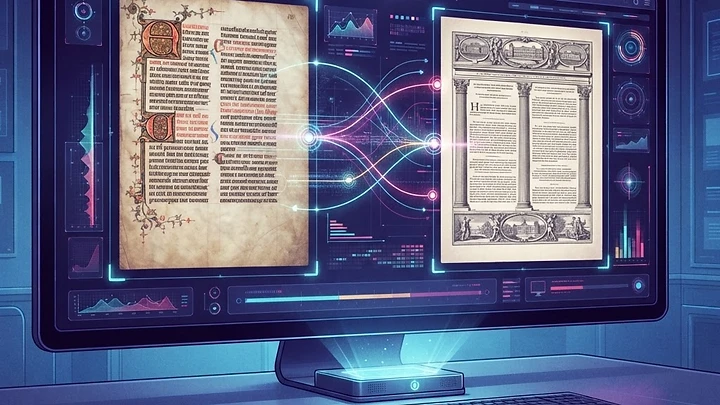
Comparative analysis, facilitated by AI, enables you to evaluate multiple historical accounts side-by-side to uncover bias, perspective, and the selective nature of recorded history. When you input two contradictory primary sources or historiographical perspectives into an AI tool, you can demand an analytical breakdown that highlights the foundational assumptions each author makes regarding the nature of the conflict.
Consider the pedagogical challenge of reconciling different viewpoints on colonial history. A standard textbook might offer a monolithic narrative that obscures the agency of local populations. By using AI to systematically compare Western diplomatic archives with indigenous oral histories or regional accounts, you can identify where the narratives diverge and why. This is not about choosing one side over the other, but about understanding the construction of historical truth.
AI provides a robust framework for this: it can extract key arguments, identify the underlying value judgments, and categorize the geopolitical interests being served by each perspective. This turns the study of conflict into a detective exercise where the goal is to discern the interplay of power and narrative.
This method also helps you avoid the trap of hindsight bias. AI can be instructed to simulate the decision-making environment of a past actor, providing you with only the information that was available at that specific time. By comparing these simulated choices against the actual historical decisions made, you gain a deeper appreciation for the difficulty of governing during times of crisis. You start to see that historical figures were acting within the constraints of their own incomplete information, much like leaders today.
This shift in perspective transforms the study of history into a rigorous cognitive exercise that sharpens your ability to evaluate current events, complex decision-making, and the impact of systemic bias in our own time.
How do AI-powered heuristic models help in understanding systemic societal collapse?
AI-powered heuristic models provide a logical structure for analyzing systemic collapse by allowing you to test variables and witness how minor shifts in political or economic stability can lead to major historical ruptures. Instead of viewing the end of an era as a random event, you can use these tools to model the feedback loops that precipitated the decline of states.
To effectively study these systems, you can utilize the following framework provided by AI-supported inquiry:
- Resource Dependency: Identify the vital resources a society relied upon and model the impact of their scarcity.
- Institutional Rigidity: Measure how resistant a government was to changing its policies in response to social unrest.
- External Shock Resilience: Evaluate how geopolitical pressures, such as war or pandemic, tested the limits of existing state capacity.
- Narrative Cohesion: Assess the strength of the cultural or ideological bond holding the population together during periods of austerity.
By applying these categories to various historical contexts—whether it be the fall of the Roman Empire or the disintegration of the Soviet Union—you gain a repeatable method for historical analysis. The AI acts as a sophisticated partner that can hold these variables constant or alter them to show you alternative outcomes. This is not historical fiction; it is a way to test your understanding of historical causality. By systematically adjusting the variables within these frameworks, you move from memorizing static facts to understanding the dynamic interplay of variables that define the human condition.
The goal is to develop a "historical intuition" that allows you to read new or unfamiliar historical contexts with the confidence that you already understand the fundamental structural pressures at work. With AI Professor Courses, you can dive deep into these systemic models, moving between history, political science, and philosophy to create a truly interdisciplinary understanding of global challenges.
Discuss this article
AI study companion
Ask about the core concepts, get a plain-English summary, or have any idea in this article unpacked. The companion reads the article itself before it answers.