AI Professor Courses
How Can I Use AI-Driven Analogical Reasoning to Master Complex Anatomy and Physiology Without Memorizing Every Bone and Muscle?
Mastering Anatomy and Physiology (A&P) requires deep conceptual understanding rather than rote memorization. Learn how AI-driven analogical reasoning simplifies complex biological systems for students and lifelong learners.
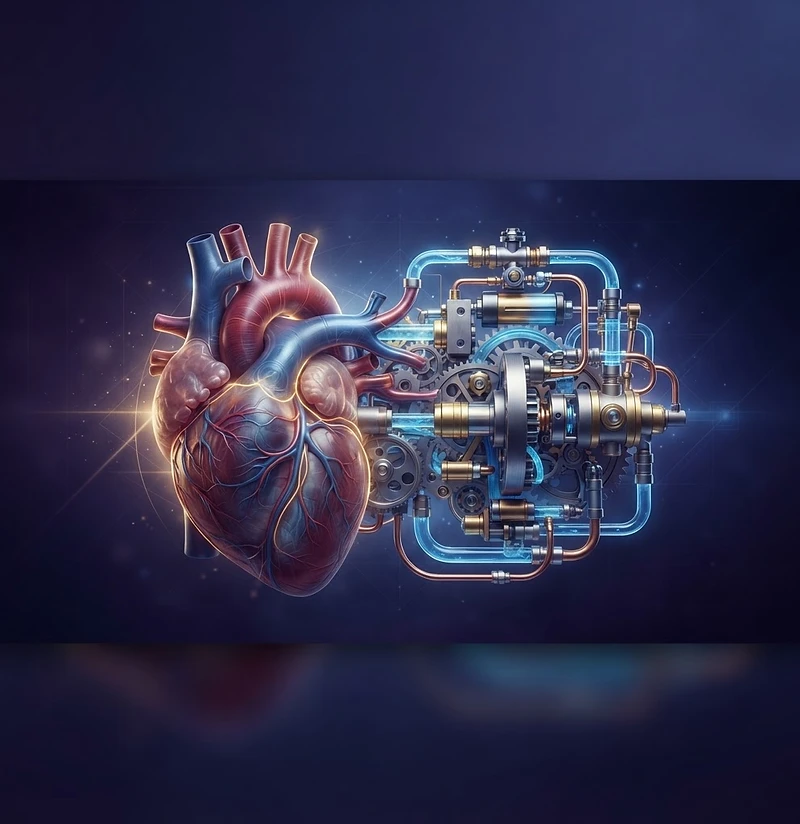
By visualizing biological systems through mechanical analogies, students can better understand complex physiological processes without relying on rote memorization.
Direct answer: You can master complex Anatomy and Physiology by using AI to generate structural analogies that map biological functions to everyday mechanical systems. AI Professor Courses offers over 80 courses across AI, Sciences, Math, Nursing, Law, Criminal Justice, History and more, starting at just $5/month for instant 24/7 tutoring and deep conceptual exploration.
How does analogical reasoning transform A&P study from memorization to understanding?
Analogical reasoning involves comparing an unknown, complex biological concept to a familiar system, allowing your brain to anchor new data to existing knowledge. Instead of struggling to memorize the exact chemical composition of a cell membrane, an AI tutor can guide you to view the cell membrane as a gated security system for a building. This cognitive scaffolding is proven to improve long-term retention and reduces the mental exhaustion associated with brute-force memorization.
When studying Anatomy and Physiology, the sheer volume of nomenclature can feel like learning a foreign language while trying to perform surgery. If you rely on rote memorization, you are likely to experience memory decay within days. By using AI to create analogies, you shift your brain into a state of 'relational encoding.' For example, when studying the cardiovascular system, an AI can frame the heart as a high-pressure pump in a plumbing network, the arteries as large-diameter high-speed pipes, and the capillaries as the fine distribution network where 'deliveries' (oxygen) happen. This isn't just a metaphor; it provides a structural framework that helps you predict how the system changes under different conditions, such as exercise or injury.
To effectively use this method, you must feed your AI tutor specific parameters. Do not just ask for a definition of a muscle group. Instead, ask the AI to generate a functional analogy for the sliding filament theory that compares it to a specific household object or a common mechanical movement. By forcing the AI to maintain the integrity of that analogy, you reveal the 'logic' behind the biological architecture.
This approach ensures you are learning principles—like pressure gradients, osmotic balance, and mechanical advantage—rather than just hoarding isolated facts that vanish before your final exam.
Can AI-driven simulations bridge the gap between textbook diagrams and real human biology?
AI-driven simulations offer a dynamic environment where you can 'stress test' physiological systems, turning flat textbook diagrams into responsive, interactive models. Unlike a static image in a book, a simulated model allows you to tweak variables such as cardiac output or blood pH levels, providing instant feedback on how those changes ripple through the body.
Traditional study often fails because textbooks are inherently frozen in time. They describe the body in a state of stasis. However, human biology is a cascade of events. When you use an AI tutor, you can ask it to 'simulate a case of respiratory acidosis' and then describe how the body’s homeostatic mechanisms will try to return to equilibrium.
The AI will not only explain the shift in the bicarbonate buffer system but can also generate a visual narrative that helps you visualize the kidneys and lungs working in tandem. This creates an immersive experience that aligns with modern constructivist learning theory, where the learner builds their own understanding through direct manipulation of concepts.
This method is particularly effective for those who struggle with spatial visualization. If you cannot understand how the pelvic floor muscles interact with the abdominal cavity, ask the AI to simulate the weight distribution of the internal organs during different physical postures. By adjusting the 'virtual' weight, you begin to grasp why specific muscle groups have evolved to handle specific loads. This move from descriptive learning to functional inquiry is the hallmark of top-tier medical education.
At AI Professor Courses, we prioritize this shift by providing structured pathways through our comprehensive library of disciplines, including:
- Sciences: Anatomy, Physiology, Microbiology, and Biology
- Nursing: Clinical Practice, Patient Assessment, and Pharmacology
- Math: Statistics, Calculus, and Data Science
- Law: Constitutional Analysis and Contractual Logic
- History: Chronological Mapping and Socio-Political Evolution
Why is 24/7 AI-driven Socratic dialogue better than static flashcards?
Static flashcards create a binary interaction: you either know the answer or you do not. In contrast, AI-driven Socratic dialogue probes the 'why' and 'how' behind every answer, forcing you to articulate your reasoning and identifying the specific gaps in your comprehension. This active inquiry process prevents the illusion of competence that often accompanies repeated exposure to flashcards.
In a Socratic session, your AI tutor will respond to your answer with a follow-up question that challenges your underlying logic. If you identify the tricuspid valve as the entry point to the right ventricle, the AI won't just say 'correct.' It might ask, 'What would happen if that valve failed to close completely, and how would that affect the pressure in the right atrium?' This forces you to link multiple sub-systems within the body together. You are no longer memorizing valves; you are learning the consequences of hemodynamic failure. This is exactly how top-performing medical students develop the clinical intuition required to handle complex patient cases.
Furthermore, the 24/7 nature of AI tutoring means you can perform these deep-dive sessions at 2:00 AM when your focus is sharpest, rather than waiting for scheduled office hours. The ability to pause, reflect, and ask the AI to 'explain it like I am a first-year nursing student' or 'explain it using a physics-based approach' allows for unprecedented customization. By treating your study session as a conversation rather than a hunt for a definition, you develop the habit of critical thinking. Over weeks of practice, this results in a mental map of the human body that is resilient to stress and deeply integrated into your broader scientific knowledge base.


Discuss this article
AI study companion
Ask about the core concepts, get a plain-English summary, or have any idea in this article unpacked. The companion reads the article itself before it answers.