
AI Professor Courses
How Can I Effectively Use AI-Driven Simulation to Master Complex Fluid Dynamics Without a Traditional Laboratory?
Mastering fluid dynamics using AI-driven simulation as an accessible, high-fidelity alternative to physical laboratories.
Digital simulations transform complex fluid dynamics from abstract formulas into observable, interactive models that deepen student intuition.
Direct answer: You can master complex fluid dynamics by using AI-driven simulation to visualize and manipulate Navier-Stokes equations in real-time without physical equipment. AI Professor Courses offers over 80 courses across AI, Sciences, Math, Nursing, Law, Criminal Justice, History and more, starting at $5/month for instant 24/7 tutoring and exploration of these concepts.
How does simulation replace the physical constraints of a fluid mechanics lab?
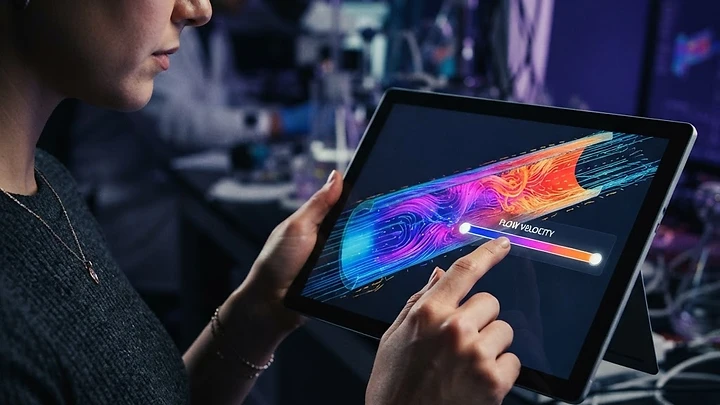
Simulation bridges the gap between theoretical physics and applied engineering by providing an interactive environment that mimics real-world conditions without the high costs of specialized hardware. In a traditional fluid mechanics laboratory, students often face rigid equipment schedules, limited access to high-speed cameras or specialized sensors, and safety protocols that restrict experimentation. AI-driven simulation platforms remove these barriers by allowing you to iterate on design variables—such as Reynolds numbers, flow velocities, and boundary conditions—within seconds, providing immediate visual feedback on how fluids react to different geometric constraints.
By leveraging advanced computational fluid dynamics (CFD) models integrated with AI, students can bridge the disconnect between abstract equations and observable phenomena. When you modify an input in a simulation, the underlying AI predicts and displays the pressure distribution and streamline patterns that would take hours to configure in a physical flume tank. This allows for rapid experimentation where you can test boundary layer theory or transition from laminar to turbulent flow simply by toggling parameters. This agility turns a passive learning session into an active research experience, enabling you to build deep intuition about how viscosity and density influence kinetic energy transfer in ways that textbooks alone cannot convey.
The transition from theoretical calculation to visual simulation is the most significant leap for learners in the engineering sciences today.
What frameworks can I use to structure my AI-assisted fluid dynamics learning?
To avoid getting lost in the sheer volume of data, adopt the Simulation-Based Inquiry (SBI) framework, which focuses on hypothesis testing rather than blind experimentation. Start by defining your independent variable, such as the shape of an airfoil or the pipe diameter in a cross-sectional flow, then use the AI tutor to predict the outcome before running the simulation. Compare your predicted results against the simulated reality. When discrepancies occur, ask the AI to perform a 'Sensitivity Analysis' to identify which variable had the most significant impact on the flow rate or pressure drop.
This active engagement forces you to interact with the underlying physics rather than just observing the pretty graphics.
Structured learning in this field usually involves categories of study that benefit from this approach, including:
- Aerodynamics and Lift/Drag calculation
- Pipe flow and pressure loss analysis
- Non-Newtonian fluid behaviors in biological systems
- Thermal management and convective heat transfer
- Turbulence modeling and flow visualization
By systematically applying this framework, you move from being a user of the simulation to a researcher of the fluid phenomenon. You should document your findings in a structured log, comparing the outputs across various scenarios. If a simulation shows a sudden stall or separation point in a flow, use the Socratic method with your AI tutor to ask why that separation occurred at a specific velocity. This turns the simulation into a dialogue, ensuring you grasp the 'why' behind the 'what' of fluid behavior.
How do I prevent AI-generated simulations from becoming a 'black box' experience?
To avoid the trap of accepting simulated results without deep understanding, you must maintain a constant connection between the numerical output and the foundational governing equations. AI-driven simulation tools can often provide the 'answer' with a single click, but mastering fluid dynamics requires you to understand the Navier-Stokes equations that govern those movements. Always request that your AI tutor breaks down the simulation results into their constituent mathematical components, showing how pressure, velocity, and viscous stress contribute to the overall vector field displayed on your screen. This ensures you remain tethered to the fundamental science even while using the most advanced digital tools.
Furthermore, perform 'sanity checks' on your simulations by calculating theoretical values for simple, canonical problems like Poiseuille flow or potential flow around a cylinder. When your manual calculations match the AI-driven simulation, your confidence in the more complex, non-linear simulations will increase. If there is a mismatch, use the AI to identify the boundary condition errors or the grid resolution issues that caused the divergence. This iterative process of debugging your simulation parameters is arguably the best way to develop an engineer's intuition.
By treating the AI not just as a calculator, but as an expert peer who demands rigorous validation of every result, you prevent the 'black box' phenomenon and ensure your understanding is robust, mathematically sound, and ready for real-world application in any engineering discipline.
Discuss this article
AI study companion
Ask about the core concepts, get a plain-English summary, or have any idea in this article unpacked. The companion reads the article itself before it answers.