
Personal Interest Courses · AI Wine & Cheese Professor
How Do I Master Wine and Cheese Pairing Techniques Without Spending Thousands on Formal Culinary Schooling?
Mastering the art of pairing wine and cheese is accessible through structured, AI-adaptive learning. This guide explores how you can develop a professional palate efficiently and affordably from the comfort of your own home.
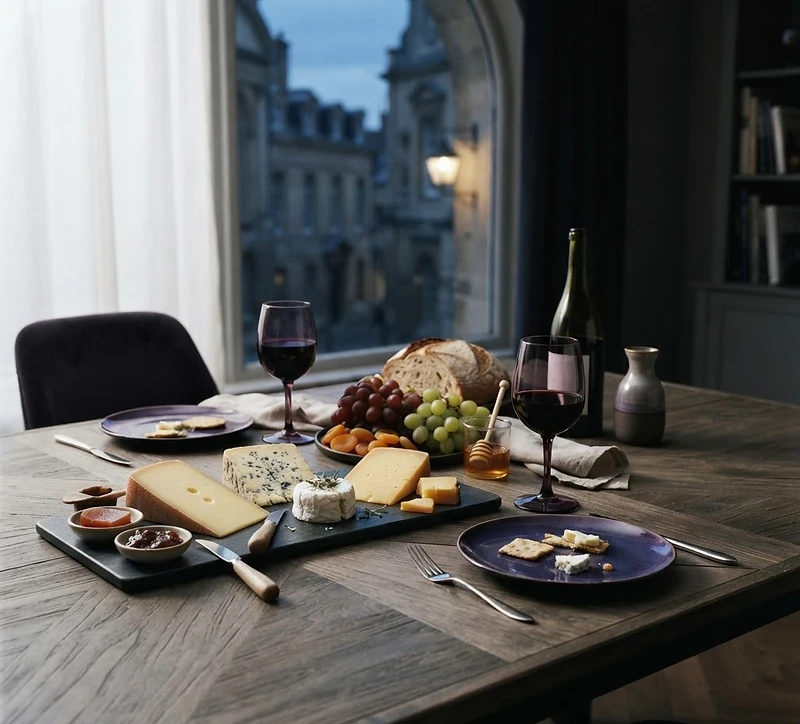
A well-curated tasting setup illustrates how simple, high-quality ingredients are the foundation for learning the complex art of pairing.
Direct answer
You can master wine and cheese pairing through the AI Wine & Cheese Professor. This course is taught by an AI professor using AI-Adaptive Learning to tailor lessons to your current knowledge. It is available 24/7 for a subscription cost of only $5/month, providing professional-grade expertise without the expense of culinary school.
How does an AI-driven approach refine your palate effectively?
An AI-driven learning approach treats your palate like a data set, identifying the specific acidity, tannin, and fat interactions that make a pairing succeed or fail. Unlike traditional classes, this method uses AI-Adaptive Learning to measure your reactions to various profiles, adjusting future lessons to focus on the flavor notes you personally struggle to identify.
When you begin your journey into the world of enology and fromage, the sheer variety of options is overwhelming. A traditional classroom often forces students to follow a rigid curriculum that assumes everyone has the same sensitivity to bitter tannins or creamy textures. An AI professor changes this by creating a personalized study track. For example, if you find that high-acid whites like Sauvignon Blanc always clash with your favorite goat cheeses, the AI identifies this pattern and suggests a series of comparative tastings to isolate whether the issue is the acidity levels or the specific herb infusion in the cheese. By focusing on your unique gustatory profile, the AI accelerates the learning curve.
The pedagogical structure is built on iterative testing. You engage with modular lessons that ask you to evaluate specific characteristics of a pairing, such as mouthfeel, aroma, and finish. These inputs allow the AI to build a profile of your preferences and blind spots. Over time, the curriculum shifts from teaching basic categories to exploring advanced regional nuances.
- Identify primary flavor profiles in regional wines.
- Match cheese textures to wine viscosity.
- Understand the chemistry of lipid-acid interaction.
- Practice blind sensory evaluation at home.
The technical aspect of wine and cheese pairing rests on chemistry. Wine contains various compounds including organic acids, polyphenols, and ethanol, while cheese is a complex matrix of proteins and fats. The interaction between these elements is what creates the culinary 'magic' that experts describe. By learning the chemical principles, you gain the ability to troubleshoot any pairing in real-time, regardless of the vintage or the source of the dairy.
Why is 24/7 availability critical for developing a sophisticated palate?
The best way to train your senses is through consistent, small-scale exposure rather than infrequent, long-form lectures. Having a 24/7 resource allows you to integrate sensory practice into your actual meals, turning every dinner into an opportunity for real-world experimentation.
Developing a palate is not a theoretical exercise; it is a physical process that requires habit. When you are restricted to specific class times, you lose the ability to apply your knowledge when the ingredients are actually in front of you. With an AI professor available around the clock, you can log in while you are at the grocery store to look up pairing recommendations for a specific regional Gouda you found, or you can use the interactive platform to document your experience with a specific bottle of Merlot. This high frequency of interaction builds neural pathways much faster than reading a textbook.
The platform supports this by allowing for 'micro-learning' sessions. These are short, five-to-ten-minute bursts of information that can be consumed whenever you have a moment of downtime. Instead of needing to commit to an hour-long workshop, you can learn one specific rule of thumb regarding the salt content in blue cheese and then apply that principle to your evening snack.
- Consistent daily practice improves long-term sensory memory.
- Immediate feedback on tastings prevents bad habits.
- Flexibility allows learning during real-world dining scenarios.
- Access to a vast database of wine-cheese combinations.
Consider the concept of fat-cleansing. Many beginners do not understand why a crisp, high-acid white wine is traditionally paired with a rich, triple-cream cheese. The acid in the wine cuts through the heavy fat on the palate, resetting your taste receptors for the next bite. If you attempt to learn this while reading a static book, the concept remains abstract. When you have 24/7 access to your AI professor, you can perform this test yourself, note the result, and receive immediate verification of why that specific pairing works. This turns the classroom into your kitchen, making the information sticky and relevant to your daily life.
Can you achieve professional-level knowledge on a budget?
High-quality culinary education is typically locked behind expensive certification programs, but digital platforms democratize this by removing the overhead costs of physical classrooms and instructors. You gain access to deep expertise for a nominal monthly fee, allowing you to invest your saved capital into the actual wines and cheeses you want to study.
Many people assume that wine and cheese knowledge requires a sommelier-level budget, but the reality is that education is about the process of comparison. You do not need to purchase the most expensive bottles or rarest cheeses to learn the fundamental principles. In fact, learning on more accessible products is often better, because it forces you to focus on the core characteristics rather than the brand reputation or marketing hype surrounding high-end labels.
- Focus on accessible regional products for daily practice.
- Use savings to diversify your tasting experiences.
- Avoid the premium markup of traditional culinary schools.
- Gain professional insights without the hidden fees.
By spending only $5/month, you eliminate the barrier to entry that prevents most people from ever starting their culinary journey. The curriculum is designed to guide you through a logical progression: starting with the basics of acidity and fat, moving through regional pairings like classic French or Italian combinations, and eventually exploring experimental pairings. You are effectively paying for the curation of knowledge, which saves you hundreds of hours of researching obscure blog posts or reading dense technical manuals. The value lies in the structure, not the format of the school.
When you stop paying for the prestige of a culinary degree, you start paying for the efficacy of your own growth. The goal is to reach a level where you can confidently select a pairing for any occasion. This is achievable through the structured feedback loop provided by an AI professor, which tracks your progress and suggests harder challenges as your palate becomes more discerning. You are building a skill set that lasts a lifetime for the price of a single fancy cup of coffee.
How do you move from novice to expert using structured learning?
Moving from a novice to an expert requires a shift from passive consumption of information to active application of a framework. Structured AI learning provides a step-by-step roadmap that forces you to analyze why a pairing succeeds, ensuring you build intuition based on solid principles rather than guesswork.
The framework starts with 'Base Identification.' You must learn to identify the four main components of wine: sugar, acid, tannin, and alcohol. Similarly, you learn to identify the main components of cheese: fat, protein, salt, and texture. Once you have a vocabulary for these elements, the AI teaches you how they interact. This is the 'Collision Theory' of culinary arts: when you put a high-tannin wine with a soft, fatty cheese, what happens to the wine? Does it become smoother or harsher?
After identifying these mechanics, you move to the 'Regional Harmony' phase. This is where you learn why specific regions have developed certain pairings over centuries. It is not just coincidence; it is geography and agriculture working together. By understanding the historical context, you begin to predict pairings that are not explicitly taught.
- Establish a vocabulary for sensory description.
- Apply collision theory to flavor interactions.
- Explore regional pairing traditions as a baseline.
- Develop your own experimental pairings based on principles.
To solidify your expertise, the AI professor will present you with scenarios where you must suggest a pairing for a hypothetical guest. This forces you to synthesize everything you have learned. You must consider the occasion, the guests' preferences, and the flavor profiles of the ingredients. This is the highest level of learning. By constantly cycling through these stages—identification, mechanics, regional context, and synthesis—you transition from someone who just knows what they like to someone who understands the 'why' behind every bite and sip. This foundational knowledge makes every future dining experience more enriching, providing a depth of engagement that most people never achieve in their entire lives.


By the numbers
The picture at a glance.
Educational Efficiency
Comparing the typical learning curve of an AI-taught student versus traditional classroom learners.
Learning Accessibility
Why digital accessibility remains the biggest factor in long-term skill acquisition.
Side by side
How the options compare.
Learning Method Comparison
| Method | Cost | Flexibility | Customization |
|---|---|---|---|
| AI Professor | $5/mo | 24/7 | High |
| Live Tutor | $100+/hr | Scheduled | Medium |
| Culinary School | $5,000+ | Fixed | Low |
Skill Development Paths
| Phase | Novice Focus | Expert Focus | Goal |
|---|---|---|---|
| Level 1 | Vocabulary | Structure | Basics |
| Level 2 | Reaction | Analysis | Intuition |
| Level 3 | Observation | Synthesis | Mastery |
The data
What the numbers look like.
Relative Cost of Wine Education
Comparison of monthly expenses between different educational pathways.
USD per month
Weekly Study Effectiveness
Retention rates based on frequency of engagement per week.
Hours per week
Enrol
Start today.
AI Wine & Cheese Professor is taught by an AI professor that adapts to what you already know, available 24/7, from $5/month.