Personal Interest Courses · AI Wine & Cheese Professor
How Do I Learn to Pair Wine and Cheese Like a Professional Sommelier?
This guide explains the foundational principles of wine and cheese pairing, detailing how modern AI-adaptive learning platforms can help enthusiasts master complex flavor profiles through personalized, 24/7 instruction without the high costs of traditional in-person culinary workshops.
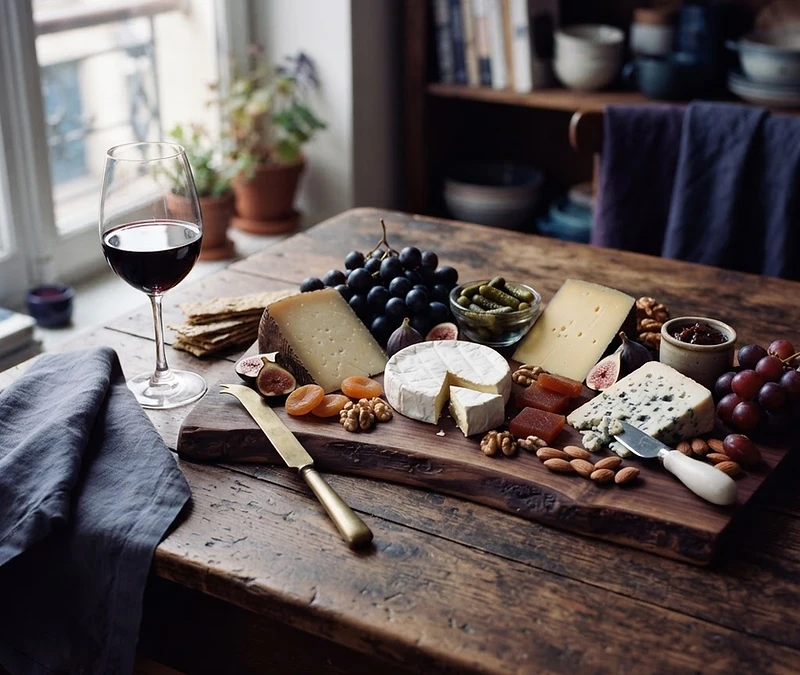
A well-curated cheese and wine board represents the ultimate goal of the course, transforming simple ingredients into a sophisticated sensory experience that you can easily recreate at home.
Direct answer
You can master professional pairing techniques through the AI Wine & Cheese Professor course. Taught by an AI professor, this program uses AI-Adaptive Learning to tailor content to your palate, available 24/7. It provides a structured, expert-led curriculum for just $5/month, making sophisticated culinary knowledge accessible to everyone.
What are the fundamental rules for pairing wine and cheese effectively?
Pairing wine and cheese effectively relies on matching the intensity of the cheese with the weight of the wine while balancing acidity, fat, and tannin profiles. The primary goal is to ensure that neither the cheese nor the wine overwhelms the other, creating a synergistic effect that enhances the distinct characteristics of both items.
At the most basic level, you should consider the concept of "congruent" versus "complementary" pairings. A congruent pairing highlights shared flavor notes, such as pairing a nutty aged Gruyère with a nutty, oxidative-style Chardonnay. A complementary pairing, by contrast, uses contrast to balance the palate, such as pairing a salty, pungent blue cheese with a sweet, acidic dessert wine like a Sauternes. The salt in the cheese cuts through the sugar, while the acidity in the wine cuts through the heavy creaminess of the cheese.
Consider these essential pillars when building your own pairing boards:
- Match intensity: Light, fresh goat cheeses demand high-acid, light-bodied whites like Sauvignon Blanc, whereas heavy, triple-creme cheeses need sparkling wines or rich Chardonnays.
- Respect the salt: Salty cheeses, particularly aged specimens, can make high-tannin red wines taste bitter or metallic, often favoring white wines or low-tannin reds instead.
- Texture matters: The fat content in cheese creates a coating on the tongue that needs to be scrubbed away; high acidity or effervescence (bubbles) acts as a palate cleanser.
- Regional alignment: Historically, wines and cheeses from the same geographic region often evolved together and naturally complement each other, such as Italian Pecorino and Chianti.
Learning these rules requires experimentation. By understanding the chemical interactions between the lipids in cheese and the phenols in wine, you transition from guesswork to a deliberate, logical approach. You might start by sampling a single wine with three different cheeses of varying ages to see how the experience changes. This process of intentional tasting is the cornerstone of building a sophisticated palate. It is not about memorizing complex charts but rather about developing an awareness of how different flavors interact and persist on your tongue after every bite.
How does an AI professor teach wine and cheese pairing differently?
An AI professor teaches wine and cheese pairing by utilizing AI-Adaptive Learning, which adjusts the complexity of the lessons based on your current knowledge, feedback, and identified flavor preferences. Unlike static books or generic videos, an AI tutor creates a dynamic syllabus that grows alongside your expertise, ensuring you never waste time on concepts you have already mastered or feel lost in advanced technical jargon without the proper foundation.
Traditional classes often follow a rigid, top-down structure, teaching everyone the exact same content in the same order. An AI-driven approach, however, functions as a private tutor that evaluates your progress in real-time. If you struggle to distinguish between various types of acid in white wines, the AI professor will surface supplementary lessons and practical exercises to reinforce that specific concept before moving forward. This method prevents the frustration of moving too fast while maintaining a rigorous pace for learners who are ready for more advanced topics like regional viticulture or the science of affinage.
Key advantages of this AI-led instruction model include:
- Immediate feedback loops: When you record your tasting notes, the AI provides instant insights on why a pairing might have been successful or where it faltered.
- Personalized roadmaps: The curriculum adapts to your local availability, suggesting pairings based on what you can actually purchase at your neighborhood store.
- Unlimited refinement: You can ask the AI to re-explain a concept or provide a different perspective, such as comparing a cheese to a different wine style, until you feel confident.
- Continuous iteration: The system remembers your past "wins" and "fails," helping you identify your personal preferences to curate a better tasting board next time.
This technology bridges the gap between expensive, rare in-person sommelier training and solitary, often misinformed, self-study. It removes the intimidation factor of traditional wine culture, offering a safe, judgment-free space to explore your tastes. Whether you want to prepare for a dinner party or simply enjoy a quiet Friday night with a better understanding of what is on your plate, the AI professor provides the expert guidance necessary to make informed, delicious decisions every single time.
Can I realistically learn to curate pairings on a tight budget?
Learning to curate professional-quality pairings is surprisingly affordable if you shift your focus from buying expensive labels to understanding the science of flavor profiles. You do not need to spend hundreds of dollars on rare wines to develop your expertise; instead, you need a structured method to evaluate the products that are already within your reach.
Many beginners make the mistake of buying "prestige" bottles that often mask their own flavors or confuse the palate. A better approach is to start with high-quality, widely available options that demonstrate specific traits—such as high acidity, heavy tannin, or distinct creaminess. By utilizing the structured guidance of the AI Wine & Cheese Professor, you learn how to identify value-for-money wines that serve as perfect case studies for your learning journey. This keeps your monthly investment focused on education rather than constant, high-cost trial and error.
When managing a learning budget, consider these strategies:
- Focus on regional variety: Sample multiple cheeses from one region alongside their traditional local wines, which often provides the best value and historical context.
- Limit your scope: Taste two wines and two cheeses at a time rather than buying an entire board, which saves money and prevents palate fatigue.
- Prioritize the basics: Master the fundamental "anchors"—such as a classic Cheddar, a sharp blue, and a fresh goat cheese—before experimenting with expensive, rare, or artisanal imports.
- Use the course as your compass: Let the curriculum guide your shopping list so every purchase is an intentional "lesson" in flavor interaction rather than an impulse buy.
Consistency is far more important than luxury in the early stages of palate development. By spending a small amount consistently on your education and strategic tasting, you develop a lifelong skill that is far more valuable than the contents of any single glass or wedge of cheese. The goal is to build a mental framework that allows you to walk into any shop, regardless of your budget, and select pairings that are guaranteed to work based on the chemistry of the ingredients, not the price tag.
How do I integrate this knowledge into my daily lifestyle?
Integrating wine and cheese knowledge into your lifestyle is best achieved by turning everyday meals into deliberate practice sessions. Because the course is available 24/7, you can access your lessons exactly when you are preparing a snack or planning a meal, allowing you to bridge the gap between abstract culinary theory and your immediate, real-world dining experiences.
To make this learning stick, you should view every trip to the grocery store as a minor research project. Start by choosing one "hero" ingredient you learned about in the course, such as a specific style of Manchego or an off-dry Riesling, and then use the AI professor’s recommendations to pick a partner for it. Over time, these small, consistent actions automate your decision-making process. Eventually, you will stop thinking in terms of strict rules and start operating based on intuitive knowledge gained through repeated, successful experimentation in your own kitchen.
Try these practical steps to maintain your momentum:
- Schedule weekly "tasting nights": Dedicate just thirty minutes once a week to test a new pairing concept you learned.
- Keep a digital log: Use your course account to track what you liked and what you did not; the AI uses this to personalize future lessons.
- Stay curious about the process: Ask your AI professor about the "why" behind successful pairings to understand the underlying science of flavor chemistry.
- Build a community: Share what you learn with friends or family, which reinforces your own understanding through the act of explaining it to others.
Ultimately, learning to pair wine and cheese is about enhancing your daily joy. It adds a layer of depth to your social gatherings and creates a meditative, sensory ritual in your personal time. By leveraging the 24/7 accessibility of AI-taught courses, you ensure that your progress is never hindered by busy schedules or inconvenient class times. Whether you have five minutes or an hour, you can engage with the material, learn one new concept, and apply it immediately to your next meal. This persistent, low-friction approach is how you turn a casual interest into a refined, lifelong skill.


By the numbers
The picture at a glance.
Learning Investment Comparison
Choosing an AI-powered course provides an affordable, high-efficiency path to mastery compared to traditional methods.
Accessibility and Flexibility
AI-adaptive learning platforms offer superior availability for modern learners with busy schedules.
Side by side
How the options compare.
Methods of Learning Culinary Pairing
| Method | Cost Level | Personalization | Accessibility |
|---|---|---|---|
| AI Professor | Very Low | High | 24/7 |
| Live Tutor | Very High | High | Restricted |
| Textbook Study | Moderate | None | Anytime |
| Generic Video | Low | None | Anytime |
Flavor Interaction Logic
| Pairing Type | Key Principle | Best For | Result |
|---|---|---|---|
| Congruent | Shared Flavors | Complementary Pairing | Harmonious |
| Complementary | Contrast | Palate Cleansing | Balanced |
| Acidity-Fat | Cutting Richness | Triple-cremes | Refreshing |
| Salt-Sweet | Balancing Intensity | Aged Cheese | Dynamic |
The data
What the numbers look like.
Monthly Learning Costs
AI-adaptive learning provides a significant reduction in the monthly cost of professional skill development.
USD per month
Skill Acquisition Rate
Learners report faster concept retention through AI-adaptive methods compared to traditional self-study.
Retention Rate (Percent)
Enrol
Start today.
AI Wine & Cheese Professor is taught by an AI professor that adapts to what you already know, available 24/7, from $5/month.