
AI Courses · AI Video Generation
How Do I Learn AI Video Generation Without Spending Thousands on Equipment?
This guide explains the fundamentals of modern video synthesis and how to master AI video generation using adaptive, cost-effective digital tools. It details how AI platforms simplify complex production workflows and help creators build professional-grade content efficiently.
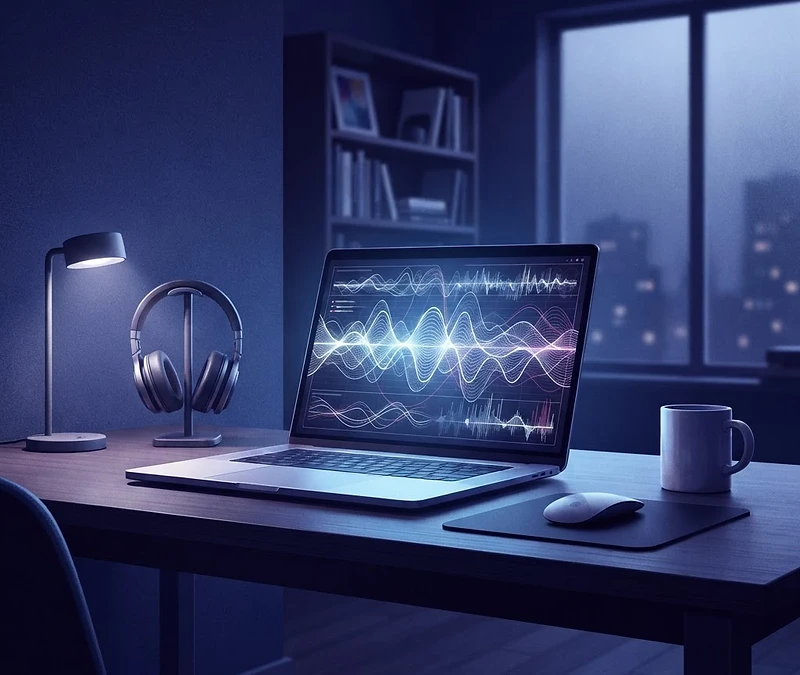
A clean digital workspace demonstrates how modern AI video generation tools allow creators to build high-end visual content from a simple, minimalist setup.
Direct answer
You can master AI video generation through the AI Video Generation course, which is taught by an AI professor. This program uses AI-Adaptive Learning to tailor lessons to your current skill level, providing 24/7 access to instruction and practice modules, all for a subscription cost of only $5/month.
How does an AI professor teach video generation differently?
An AI professor teaches video generation by dynamically adjusting the curriculum based on your specific technical background and creative goals in real-time. By leveraging AI-Adaptive Learning, the system identifies which concepts you grasp quickly and which require additional demonstration, ensuring you never waste time on redundant material.
Traditional video education often follows a rigid linear path, forcing every student to sit through hours of foundational editing theory before touching generative tools. In contrast, an AI-led approach allows you to jump directly into prompt engineering for video models, learning the essential physics of motion and lighting as you encounter them in your projects. If you are struggling with frame consistency, the professor detects the pattern and serves you targeted practice exercises focused specifically on temporal stability.
- Personalized lesson pacing based on individual progress.
- Instant feedback loops on your prompt structure.
- Context-aware explanations that use your own creative projects as examples.
- Dynamic resource allocation, prioritizing the tools you are currently using.
Consider the process of creating a cinematic walk-through. A human instructor might assign a ten-hour project that covers every setting in a software suite. An AI professor, however, breaks this down into micro-modules. You start by generating a static background, then learn to animate specific foreground elements, and finally optimize the frame interpolation. Because the AI observes your inputs, it can instantly tell you why a specific prompt resulted in "morphing" artifacts, offering a correction before you move to the next step. This immediate feedback loop is the hallmark of modern AI-driven pedagogy, which prioritizes actionable skill acquisition over passive consumption of lecture videos. By focusing on the "why" behind generative artifacts, you gain a deeper understanding of latent spaces and noise patterns, allowing you to manipulate video models with far greater precision than someone following a static tutorial.
What are the essential technical skills for AI video creation?
To succeed in AI video generation, you must understand the relationship between text prompts, seed numbers, and motion vectors. The core of this skill set involves learning how to translate visual concepts into highly descriptive, tokenized language that AI models can interpret as specific cinematographic instructions.
Technical mastery is less about memorizing software buttons and more about developing a "vocabulary of intent." When you describe a scene, the model needs to know not just the subject, but the focal length, the movement path, and the style of the lighting. Our course focuses on these structural elements, moving you beyond basic prompts to complex, multi-stage workflows that maintain consistency across long clips.
- Understanding prompt weight distribution for stable generation.
- Learning to manage seed values for frame-to-frame coherence.
- Mastering negative prompts to eliminate visual artifacts.
- Advanced techniques for keyframing generative parameters.
Take the example of a camera pan. A novice might type "a camera panning over a mountain." An experienced AI creator understands that the model may interpret this in dozens of ways. Instead, they use a structured approach: defining the subject first, then the motion in a specific vector, and finally, the style. By using the AI professor to test variations of this prompt, you see how subtle changes in vocabulary alter the output. You learn to treat the AI not as a magic box, but as a technical tool that requires precise input parameters. This level of technical literacy is what separates high-end professional results from generic, low-quality "glitch" videos. The goal is to gain full control over the aesthetic outcome, ensuring that your vision is represented accurately on the screen while minimizing the trial-and-error time that often plagues beginners.
Can I produce professional video content on a limited budget?
Yes, you can achieve professional results on a limited budget because AI video generation democratizes production by replacing costly equipment with subscription-based cloud compute. You do not need expensive cameras, lighting rigs, or massive storage arrays to create high-quality footage anymore.
When you eliminate the need for physical equipment, your overhead costs drop drastically. Instead of spending thousands on a studio setup, you invest your time into learning the software and prompt engineering. The primary cost shifts to the subscription services that provide access to powerful graphics processing units, which generate the frames for you. By learning how to optimize your prompts to generate high-quality results on the first or second attempt, you further reduce your compute costs.
- Subscription models replace expensive capital hardware investments.
- Cloud-based generation allows for high-end results on standard laptops.
- Scalability is built into the workflow, allowing for rapid iteration.
- Access to massive creative libraries within the software environments.
Consider the workflow of a freelance creator. Previously, shooting a commercial scene required travel, a crew, and lighting equipment. Now, you can build a synthetic version of that scene using a web browser. The AI professor teaches you how to generate textures, models, and environments from scratch, then stitch them together into a compelling narrative. This shift in production requires a change in mindset; you are no longer a videographer capturing the world, but a director curating synthetic data. This approach is not only cheaper but also significantly faster. You can iterate through twenty variations of a scene in the time it would take to set up a single physical tripod. The course guides you through these cost-saving workflows, ensuring you understand how to maximize the value of every dollar spent on cloud resources, making high-end production accessible even for those starting with very little.
Is AI video generation a sustainable career path?
AI video generation is increasingly vital for creative professionals because the demand for dynamic, personalized content continues to outpace the traditional capacity of physical production houses. By mastering these tools now, you position yourself at the forefront of a shifting media landscape.
Sustainability in this field comes from combining technical proficiency with strong storytelling skills. While the technology changes rapidly, the principles of narrative structure, visual rhythm, and audience engagement remain constant. The AI professor helps you apply these traditional storytelling techniques to a new, synthetic medium, ensuring that your work resonates with audiences who are increasingly bombarded with low-quality, automated content.
- Increasing demand for rapid-turnaround video assets in digital marketing.
- Flexibility to pivot between animation, live-action, and experimental styles.
- Low barrier to entry allows for rapid prototyping of creative concepts.
- Opportunity to build unique visual brands without traditional production constraints.
Think about the needs of modern businesses. They need short-form video for social media, internal training, and product demos. Previously, this meant hiring agencies at high costs. Now, the skills you learn in AI video generation allow you to become a one-person production engine. You can create a high-quality product video in hours that would have traditionally taken a week of planning and post-production. The course emphasizes how to structure your projects so they are repeatable and scalable, teaching you how to build your own library of assets and styles that you can reuse across different projects. This efficiency is what makes your skill set "future-proof." By focusing on the intersection of human creativity and machine speed, you are learning a skill that will be increasingly valued as the barrier between imagination and reality continues to thin. Whether you are aiming to be a creator, a marketer, or an entrepreneur, understanding how to harness these powerful generative engines will be a core competency in the coming years.

By the numbers
The picture at a glance.
Cost Efficiency of AI Production
Comparing the monthly overhead of traditional physical production versus AI-driven digital workflows.
Time-to-Content Ratio
The hours required to produce a one-minute high-quality video clip using different methods.
Side by side
How the options compare.
Comparison of Learning Methods
| Feature | AI Professor | Live Tutor | Textbook |
|---|---|---|---|
| Availability | 24/7 | Scheduled | Anytime |
| Adaptivity | Real-time | Partial | None |
| Cost | Low | Very High | Low |
| Feedback Speed | Instant | Delayed | None |
Video Generation Quality Factors
| Element | Impact | Complexity |
|---|---|---|
| Prompting | High | Medium |
| Seed Stability | High | High |
| Render Settings | Medium | Low |
| Upscaling | High | Low |
The data
What the numbers look like.
Skill Retention over Time
Comparing knowledge retention rates between AI-Adaptive learning and standard static video tutorials.
Retention Percent
Learning Speed
Average hours required to reach intermediate proficiency in AI video generation.
Hours per Week
Enrol
Start today.
AI Video Generation is taught by an AI professor that adapts to what you already know, available 24/7, from $5/month.