Personal Interest Courses · AI Wine & Cheese Professor
How Do I Build a Sophisticated Wine and Cheese Pairing Menu for Home Entertaining?
This guide explains the foundational principles of pairing wine and cheese effectively for social gatherings. It introduces our AI Wine & Cheese Professor course as an adaptive, cost-effective resource for mastering these pairings through personalized, 24/7 guided learning.
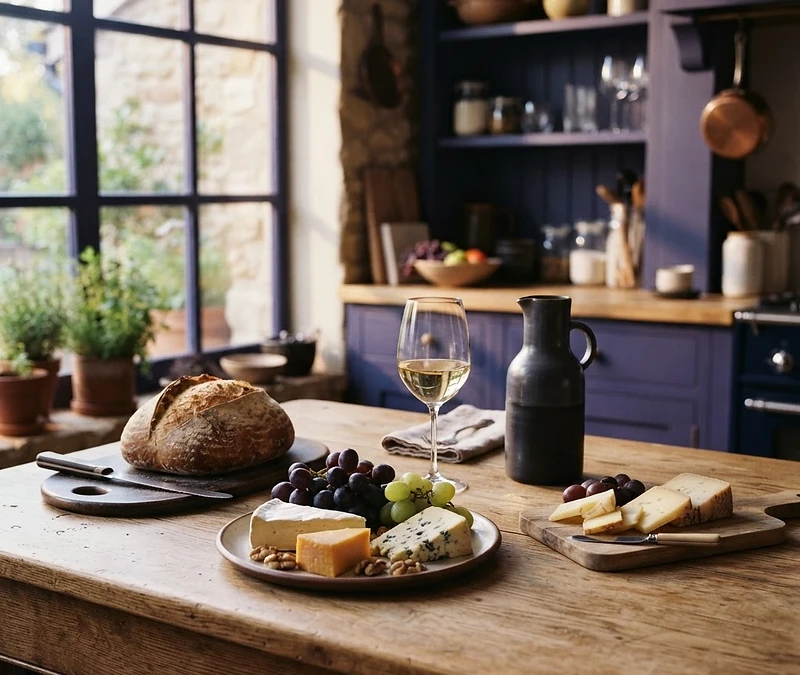
A well-curated home tasting setup demonstrates how simple ingredients can become a sophisticated experience when paired with intention and knowledge.
Direct answer
You can master the art of pairing by understanding acid, fat, tannin, and salt balance. The AI Wine & Cheese Professor course, taught by an AI professor, provides AI-Adaptive Learning to match your specific palate and preferences. This 24/7 curriculum helps you build perfect menus for just $5/month.
What are the fundamental principles that define a successful wine and cheese pairing? A successful pairing relies on balancing structural elements like acidity, salt, fat, and tannins to create a cohesive sensory experience. The primary goal is to ensure that the flavors of the wine and the cheese elevate one another rather than clashing or masking each other. When you approach a pairing, consider the intensity of both the cheese and the wine. A delicate, soft goat cheese will be obliterated by a heavy, high-tannin Cabernet Sauvignon, whereas that same goat cheese would sing alongside a crisp, high-acid Sauvignon Blanc.
The Balancing Act
Acidity in wine is a great cleanser for the palate, especially when dealing with creamy, high-fat cheeses like triple-crème Brie or Camembert. The acidity slices through the richness, preventing the palate from feeling coated or exhausted. Conversely, when pairing with a hard, salty cheese like an aged Parmigiano-Reggiano, you need a wine with enough depth and perhaps a hint of sweetness or fruit forwardness to stand up to the salt content. If the cheese is very salty, avoid high-tannin reds, as the salt can make the tannins taste metallic and harsh. Instead, reach for a medium-bodied white or a sparkling wine, where the bubbles provide a delightful textural contrast that dances with the dense texture of the cheese.
Practical Pairing Considerations
- Match intensity: Light wines with light cheeses, bold wines with bold cheeses.
- Complement or Contrast: Seek flavors that share similar profiles or those that provide a needed counterpoint.
- Respect the region: Often, wines and cheeses from the same geographical location evolved together over centuries and make naturally harmonious pairs.
- Texture matters: Pay attention to the crunch, creaminess, and firmness of the cheese relative to the body and weight of the wine.
Understanding these rules allows you to experiment with confidence. Instead of relying on rigid, memorized combinations, you learn the mechanics of flavor. By practicing these interactions, you gain the ability to look at any cheese board and intuitively know which bottle from your cellar or local shop will perform best, ensuring your home events are both sophisticated and consistently enjoyable for your guests.
How does the AI Wine & Cheese Professor customize learning for your specific palate?
AI-Adaptive Learning works by analyzing your individual flavor preferences and learning speed to tailor lessons specifically to your palate. Unlike static textbooks that teach generic pairings, this system observes which combinations you respond to and adjusts the curriculum to focus on those flavor profiles. Whether you lean toward bold, earthy reds or crisp, mineral-heavy whites, the course recognizes your starting point and builds a path that deepens your specific expertise while gently expanding your comfort zone.
Personalized Tasting Paths
When you start, the AI professor assesses your current knowledge level and sensory preferences. If you struggle to identify "tannins" or "acidity," the course provides targeted exercises to help you develop those sensory skills. The system effectively tracks your progress, noting which categories of cheese or regions of wine you have mastered. If you show a particular affinity for blue cheeses, the course will automatically weave in advanced topics like the interaction between sweet dessert wines (like Sauternes) and the sharp, salty punch of Roquefort or Gorgonzola. This iterative feedback loop ensures that no two students have the exact same learning experience, as the content evolves based on your personal journey.
Key Adaptive Features
- Skill assessments to identify your baseline tasting capability.
- Dynamic content adjustment based on your successful pairing tests.
- Real-time feedback loops that explain why certain pairings succeed or fail.
- Goal-oriented modules that help you prepare for specific events or dinner parties.
Because the AI professor is available 24/7, you can conduct your learning sessions whenever you are actually holding a glass or a piece of cheese. This immediacy is vital for sensory education; the ability to read about a specific pairing effect while simultaneously tasting the wine and cheese creates a stronger neurological link than theoretical study alone. By removing the need for scheduled classes or expensive tastings, the platform allows you to build your palate at a pace that is comfortable, sustainable, and highly effective, turning casual interest into refined connoisseurship.
Why is home experimentation the most effective way to improve your hosting skills?
True mastery of wine and cheese comes from repeated, low-stakes exposure where you can observe how flavors change in real-time. Home experimentation allows you to control variables such as temperature, glass choice, and side accompaniments, which provides a level of clarity that public classes often lack. By curating your own "lab" environment at home, you remove the pressure of external opinions and allow your own senses to dictate what works, which is the cornerstone of developing a confident, personal style in hosting.
Building Your Tasting Lab
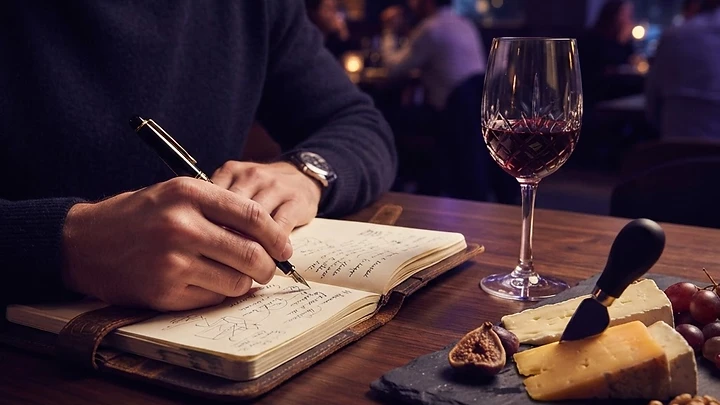
To effectively experiment at home, start by limiting your variables. Select two distinct wines—perhaps a dry white and a medium-bodied red—and three contrasting cheeses, such as a sharp aged cheddar, a creamy cow’s milk cheese, and a pungent blue. As you taste, take brief notes on what you observe. Notice how the temperature of the wine changes its aromatic profile and how the cheese evolves in your mouth as it warms up. This process of intentional observation is where learning actually happens. The AI Wine & Cheese Professor guides these experiments by giving you specific, manageable assignments that keep your home tastings focused and productive.
Structuring Your Home Experiments
- Start with a baseline: Compare a single wine with two different types of cheese to see the impact of texture.
- Vary the temperature: Taste a white wine at fridge temperature versus cellar temperature to observe flavor shifts.
- Introduce accompaniments: Test how honey, nuts, or preserves change the interaction between a wine and cheese.
- Document your results: Keep a simple log of your favorite pairs so you can recreate them later.
Consistency is far more important than intensity when it comes to palate development. Spending thirty minutes a week engaging in a guided, purposeful experiment will yield far greater results over time than attending a single, information-heavy weekend workshop. By integrating these sessions into your regular social life, you normalize the process of learning. Your friends will appreciate the effort, and you will find that your ability to create memorable menus becomes second nature, transforming your home into a sophisticated venue for culinary discovery.
Can you realistically develop professional-level pairing intuition on a budget?
Developing professional intuition in wine and cheese is a matter of cumulative sensory experience rather than the cost of the products being consumed. While high-end vintages and artisanal imports are wonderful, the foundational principles of flavor chemistry operate the same way in a five-dollar grocery store bottle as they do in a fifty-dollar bottle. The AI Wine & Cheese Professor focuses on teaching the underlying logic of these interactions, which empowers you to find "hidden gem" pairings that perform exceptionally well without requiring a luxury budget.
The Logic of Value Pairing
Professional sommeliers often prioritize knowledge over cost. When you understand why a specific high-acid white wine balances the fattiness of a triple-crème cheese, you can apply that rule to any price point. You stop looking for specific labels and start looking for profiles. This shift in mindset is the most powerful tool for any home host. The AI professor provides you with the frameworks to identify these profiles, teaching you to read labels and understand regional styles so you can shop with confidence at any price range. You learn how to identify value, choosing wines and cheeses that offer the best flavor profile for your specific budget.
Cost-Effective Learning Strategies
- Focus on regional classics: Many affordable regions produce world-class pairings that teach you the basics without the premium price.
- Buy smaller portions: You can sample more varieties by purchasing smaller quantities, increasing your exposure to different profiles.
- Focus on the science: Once you grasp how tannins, sugar, and fat interact, you can predict success across any brand or price tier.
- Leverage 24/7 access: Use the course's flexibility to fit learning into your schedule, ensuring you are always ready for your next event.
Ultimately, your intuition improves with exposure. By learning the mechanics of pairing, you minimize the risk of "bad" pairings, which saves money in the long run. The goal is to make your home entertaining more enjoyable and more successful, regardless of how much you spend on the ingredients. With the persistent, adaptive support of the AI professor, you are building a lifetime skill set that pays dividends every time you host, proving that sophisticated taste is about the quality of your knowledge, not the depth of your wallet.

By the numbers
The picture at a glance.
Efficiency of AI Learning
The AI Wine & Cheese Professor optimizes your time, ensuring every minute spent learning directly improves your hosting capability.
Learning Impact
Students report significant improvements in confidence and menu planning speed within the first month of using the AI-Adaptive platform.
Side by side
How the options compare.
Comparative Learning Methods
| Method | Cost | Flexibility | Personalization |
|---|---|---|---|
| AI Professor | $5/mo | 24/7 | High |
| Live Tutor | $100/hr | Limited | Medium |
| Cookbook | $20/unit | None | Low |
| Wine Course | $500/term | Fixed | Low |
Pairing Strategy Comparison
| Strategy | Ease | Result | Budget |
|---|---|---|---|
| Random | Easy | Hit/Miss | High |
| Static Rules | Medium | Predictable | Medium |
| AI-Adaptive | Guided | Exceptional | Low |
The data
What the numbers look like.
Average Monthly Investment
The cost of AI-adaptive education compared to traditional culinary schooling methods over one year.
USD
Knowledge Retention Over Time
Students using AI-Adaptive systems maintain higher levels of information retention due to personalized, spaced-repetition feedback.
Percentage
Enrol
Start today.
AI Wine & Cheese Professor is taught by an AI professor that adapts to what you already know, available 24/7, from $5/month.