AI Courses · AI Courses Bundle
How Can I Efficiently Master New Technical Skills Using AI-Adaptive Education?
This guide explains how AI-Adaptive Education accelerates skill acquisition by tailoring content to your existing knowledge. It explores strategies to maximize learning outcomes through continuous feedback loops, personalized pacing, and smart content generation for deep subject mastery.
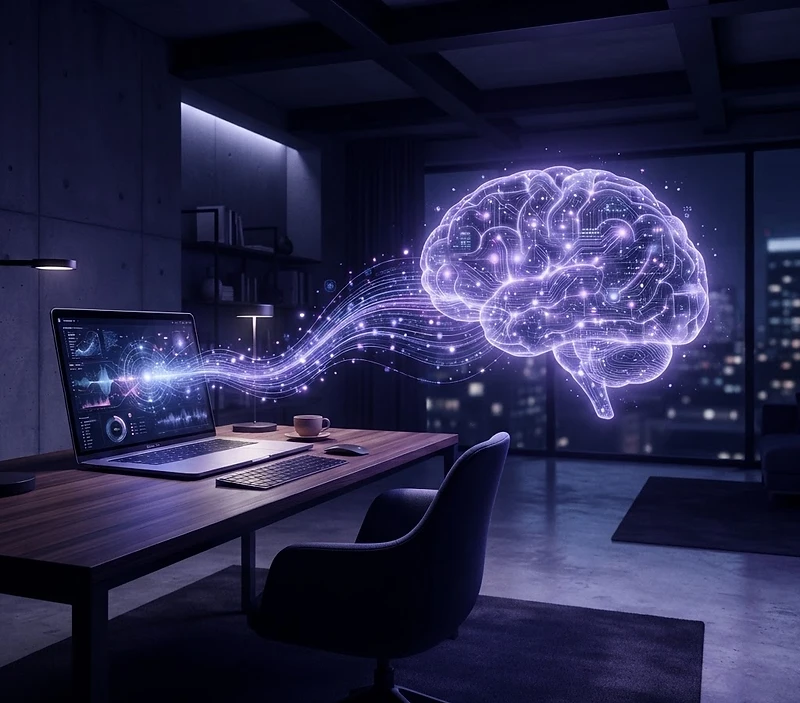
This scene represents the seamless synthesis of complex data into personal knowledge, illustrating the core benefit of AI-adaptive learning for the modern professional.
Direct answer
You can master new technical skills by using AI-Adaptive Education, a system where an AI professor customizes every lesson based on your unique knowledge gaps. This approach allows for 24/7 personalized instruction that adapts in real-time to your progress. You can access this full suite of learning tools for just $5/month.
How does the AI-Adaptive Education model improve upon traditional self-directed learning?
Traditional learning often fails because it forces students to follow a rigid, one-size-fits-all curriculum that ignores individual strengths and weaknesses. By contrast, AI-Adaptive Education uses intelligent algorithms to monitor your comprehension levels in real-time, adjusting the depth and pacing of instruction to ensure you never waste time on concepts you already understand. This model serves as a private tutor that is available at any time, eliminating the wait times typically associated with human instructors.
When you engage with an AI professor, you are not simply consuming static content. Instead, the system observes how you interact with practice problems and conceptual explanations to build a dynamic profile of your cognitive map. If you struggle with a specific technical concept, the AI automatically shifts to a different pedagogical approach, such as providing a simpler analogy or a step-by-step breakdown of the logic involved. This level of customization is rarely available in standard textbooks or online video lectures, which remain static regardless of whether the viewer is confused or bored.
- Real-time adjustment of lesson difficulty levels
- Immediate feedback on conceptual misunderstandings
- Personalized practice sets focused on identified weaknesses
- Elimination of redundant content review
- Continuous progression tracking across multiple domains
To see this in action, consider a learner trying to grasp a new programming language. A standard course might spend three hours on basic variable declaration. However, an adaptive system detects after ten minutes that the learner understands the concept and skips ahead to more complex logic like asynchronous functions or object-oriented design. The learner saves hours of time, maintaining motivation and focus.
By continuously testing and adapting to your responses, the AI professor ensures that you are always operating in the optimal zone of proximal development, where the material is challenging enough to promote growth but not so difficult that it leads to total frustration. This creates a much more efficient path to mastery for anyone looking to upskill rapidly in a competitive environment.
What specific strategies should learners use to integrate AI-Adaptive Education into their daily routines?
Integration starts by treating your AI professor as a partner in a structured, iterative workflow rather than a passive information source. The most successful learners set aside short, high-intensity study blocks rather than attempting long, unfocused sessions. By utilizing the 24/7 availability of AI-Adaptive Education, you can fit your learning into the natural gaps of your day, such as during commutes or lunch breaks, allowing for consistent reinforcement of new information.
One effective strategy is the 'Concept Feedback Loop,' where you present a new topic to the AI, attempt a practical application, and then ask the AI to critique your specific output. Because the system retains the history of your previous interactions, it can point out when you are making the same error repeatedly, identifying a deeper conceptual misunderstanding that you might have missed on your own. This turns every study session into an active, diagnostic encounter. Instead of just reading about a topic, you are engaged in an ongoing conversation that challenges your assumptions and forces you to articulate what you have learned, which is proven to improve memory retention significantly.
- Schedule daily fifteen-minute 'micro-sessions' for consistent progress
- Actively prompt the AI to challenge your current understanding
- Use the AI to generate personalized quizzes based on your errors
- Summarize complex ideas back to the AI for validation
- Review your 'learning history' logs at the end of each week
For example, if you are learning advanced financial modeling, do not just follow the tutorial. Input a hypothetical spreadsheet scenario and ask the AI to act as a reviewer who identifies hidden risks or logic errors in your formula structure. This active application forces you to engage with the material at a much deeper level than passive reading. By consistently feeding the system your output, the AI gets better at identifying your unique 'knowledge profile,' allowing it to provide even more precise guidance over time.
When you make this a part of your daily rhythm, the cumulative effect of hundreds of small, adaptive interactions results in a far more robust understanding of the subject matter than any static course could provide.
How does the AI professor overcome the common barriers that cause students to drop out of technical courses?
Many students abandon complex subjects because they encounter a 'plateau of frustration' where the material becomes too dense to follow, and they lack the support to bridge the gap. The AI professor mitigates this by providing instant remediation that is completely non-judgmental, allowing you to ask the same basic question ten times without the social pressure or embarrassment that might occur in a classroom setting. This creates a psychologically safe environment for deep experimentation and mistake-making, which are the hallmarks of successful learning.
Furthermore, the system manages cognitive load by breaking down massive, intimidating subjects into digestible components. If you are learning data science, for instance, the AI will not overwhelm you with a massive syllabus. It will present the material in segments that align with your current comfort level, ensuring you master the foundations of probability before moving on to complex machine learning algorithms. If you start to falter, the system identifies the specific sub-topic causing the issue and pivots to a remedial lesson designed to strengthen that exact foundation before returning to the main track.
This proactive intervention is the key to preventing the burnout that typically occurs when students fall behind in traditional semester-based programs.
- Immediate clarification of any confusing terminology or logic
- Support for different learning styles like visual or conceptual
- No penalties for repetitive questioning or slow progress
- Ability to pause and resume learning at any hour
- Focus on mastery rather than arbitrary course timelines
Consider a student studying organic chemistry. A standard lecture might be delivered at a pace that is too fast for some and too slow for others. If the student misses a link between two reactions, they often become lost for the remainder of the course. With AI-Adaptive Education, the student can pause, highlight the specific reaction step that is unclear, and ask the AI to explain the underlying thermodynamics.
The AI provides a tailored explanation until the student confirms understanding, then seamlessly reconnects that piece to the larger lesson plan. This structure ensures that no gaps are left behind, keeping the learner on a consistent path toward proficiency. By removing the fear of falling behind, the student stays motivated to continue the process.
What does the transition to AI-Adaptive learning mean for the future of professional development and skill mastery?
We are witnessing a fundamental shift where the gatekeepers of knowledge—traditional institutions and static books—are being replaced by agile, personalized systems. Professional development is moving away from occasional seminars toward continuous, lifelong learning powered by AI. This allows professionals to update their skills at the exact speed of industry change, rather than waiting for outdated curricula to be revised. As the cost of education drops, the primary investment for the learner becomes their time and attention, making the efficiency of the AI interaction the most critical factor for success.
This shift implies that mastery is no longer reserved for those who can afford expensive private tutoring or specialized institutions. Because AI-Adaptive Education is accessible, the barrier to entry for highly technical or complex subjects is being leveled. Anyone with an internet connection can now build a highly specialized curriculum that evolves as they grow. This allows individuals to pivot careers or specialize in niche technical fields with a speed that was previously impossible.
The ability to learn, unlearn, and relearn is becoming the defining skill of the modern era, and those who adopt adaptive, AI-driven workflows are positioning themselves to thrive in a rapidly changing labor market.
- Access to high-level technical expertise for all levels
- Rapid skill acquisition to match changing industry demands
- Ability to create custom learning paths across multiple disciplines
- Transition from passive degree-seeking to active skill-building
- Increased confidence in handling complex, unfamiliar topics
To illustrate, imagine a marketing professional who decides to pivot into data analytics. Instead of enrolling in a two-year degree, they can use an AI-adaptive platform to focus exclusively on the specific statistical methods and coding tools required for their transition. The AI provides an accelerated path, skipping the general prerequisites they already know while focusing heavily on the technical gaps. Within months, not years, the learner achieves a level of competency that would have taken much longer under a traditional model.
This democratization of high-quality instruction will continue to redefine what it means to be an expert in any given field, making the role of the AI professor indispensable for anyone serious about continuous, efficient professional growth.

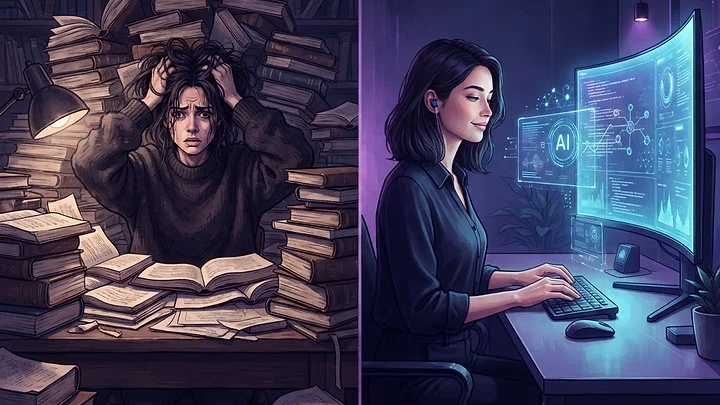
By the numbers
The picture at a glance.
Educational Efficiency Gains
Learners report significant improvements in study outcomes when switching to AI-adaptive methods over traditional textbook-based self-study.
Cost and Accessibility Overview
The comparative costs and availability of various learning support models highlight the economic accessibility of AI-professor systems.
Side by side
How the options compare.
Learning Method Comparison
| Feature | AI Professor | Live Tutor | Textbook |
|---|---|---|---|
| Availability | 24/7 Access | Scheduled | Always |
| Adaptivity | Real-time | Human-led | None |
| Personalization | High | Moderate | Low |
| Cost Basis | Subscription | Hourly | Per Unit |
Study Strategy Efficiency
| Goal | Traditional | AI-Adaptive | Benefit |
|---|---|---|---|
| Retention | Passive | Active | Better |
| Focus | Broad | Targeted | Faster |
| Feedback | Delayed | Instant | Immediate |
| Flexibility | Fixed | Fluid | Superior |
The data
What the numbers look like.
Skill Mastery Timeframe
This chart illustrates the time required to achieve baseline proficiency in a new technical skill using different educational approaches.
Months
Weekly Study Productivity
Comparing the average hours of deep, productive focus achieved per week across different learning modalities.
Hours per week
Enrol
Start today.
AI Courses Bundle is taught by an AI professor that adapts to what you already know, available 24/7, from $5/month.