Art Appreciation · AI Art Appreciation Professor
How Can I Develop a Deeper Understanding of Art History Without a Traditional Classroom?
This guide explores modern methods for mastering art appreciation through personalized AI-driven instruction. Learn how to cultivate a sophisticated eye for aesthetic analysis at your own pace, regardless of your previous experience or formal background in art theory.
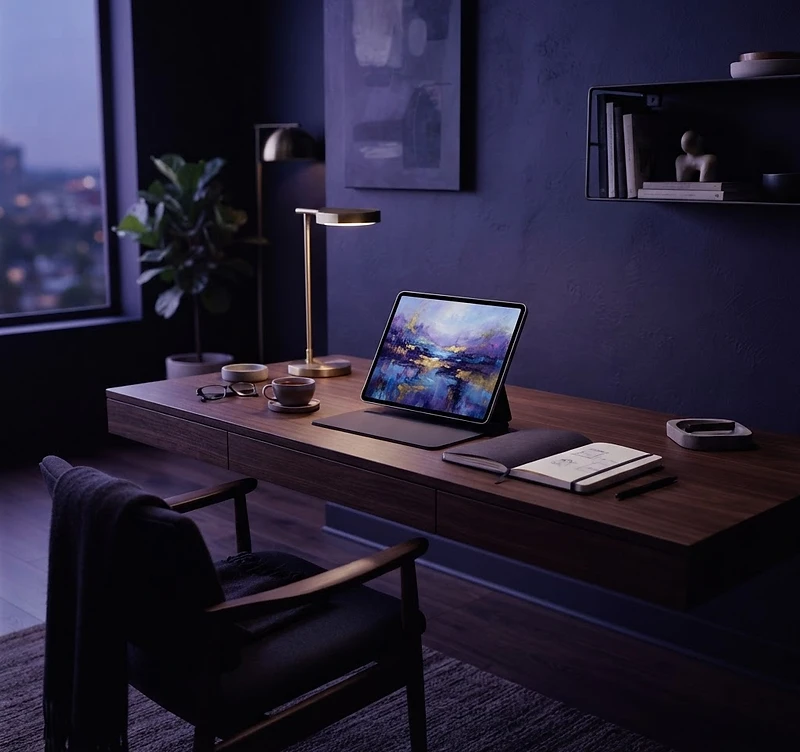
A dedicated space for digital learning allows you to interact with high-resolution masterworks while you develop your own critical analysis skills in complete comfort.
Direct answer
You can master art appreciation through the AI Art Appreciation Professor, a program taught by an AI professor that utilizes AI-Adaptive Learning to adjust to your unique knowledge level. Accessible 24/7, this course offers a flexible, expert-led experience for just $5/month, making sophisticated art historical analysis truly affordable and convenient.
How does an AI-adaptive professor teach the nuances of art appreciation?
An AI-adaptive professor teaches art appreciation by continuously calibrating content to match your current visual literacy, identifying gaps in your knowledge and filling them with targeted historical and technical context. Unlike a static textbook, the AI learns your preferences and knowledge level to provide a bespoke educational journey.
Traditional classroom settings often force a linear curriculum that may move too quickly through periods you already understand while rushing through complex movements that require more time for reflection. An AI-adaptive system shifts this dynamic entirely. When you begin your journey with the AI Art Appreciation Professor, the engine evaluates your baseline familiarity with movements like the Renaissance, Impressionism, or Modernism. It then constructs a pathway that prioritizes your curiosity.
For instance, if you are drawn to the brushwork of Van Gogh but struggle to articulate why it evokes a specific emotional response, the system does not just provide a definition of Post-Impressionism. Instead, it guides you through a comparative analysis, showing you how specific color theories and physical application techniques differentiate the work from earlier, more rigid Academic traditions. It functions like a private mentor who knows exactly which pieces will challenge your perceptions next.
Consider a framework for analyzing a painting using the Look-Think-Connect method:
- Look: Spend time observing the composition without reading labels or historical context.
- Think: Identify the technical choices made by the artist regarding light, shadow, and medium.
- Connect: Relate these findings to the societal pressures or technological shifts occurring at the time.
By practicing this framework with the AI, you receive real-time feedback on your observations. If you misidentify a technique, the AI provides a gentle nudge toward the correct terminology, explaining the 'why' behind the visual evidence. This interactive loop ensures that your understanding of art is built upon a solid foundation of observation rather than just rote memorization of dates and names. You are not just studying history; you are learning how to decode the visual language of the past, turning every gallery visit into a rich, personal conversation with the masters.
Can I learn to evaluate art quality on my own without an art degree?
You can certainly learn to evaluate art quality by focusing on the core principles of aesthetics, technical execution, and historical context, which are the primary pillars of the AI-led curriculum. Developing a critical eye is a skill built through systematic exposure and guided analytical practice rather than formal certification.
Most people assume that art appreciation is an innate gift, but it is actually a learned competency. When you look at a piece, your brain is often overwhelmed by the sheer volume of visual stimuli. The AI Art Appreciation Professor helps you filter this input by teaching you how to look for specific 'cues' that signal intentionality in an artist's work. You learn to recognize the difference between a deliberate stylistic choice and a lack of technical refinement.
This process involves stripping away the myth of the 'genius' and focusing on the tangible evidence left behind on the canvas or in the sculpture.
To develop this skill, you must engage with a wide variety of media and time periods. The AI suggests a diverse range of works, ensuring you don't stay within a comfort zone. By contrasting a classical Roman bust with a contemporary installation, the AI helps you understand how the purpose of art has shifted from religious and state propaganda to individualistic expression. You will learn to evaluate works based on their own internal logic.
Here are some of the technical pillars you will explore to refine your critical eye:
- Compositional Balance: How the artist leads your eye through the work.
- Palette Choice: The symbolic or psychological weight of the colors used.
- Material Integrity: How the choice of medium affects the durability and texture of the piece.
- Contextual Relevance: Why the work mattered to the audience of its time.
When you consistently apply these criteria, the 'mystery' of what makes a work 'good' begins to clear. You will stop worrying about whether you are 'supposed' to like a piece and start identifying why the work succeeds or fails in communicating its message. This autonomy is the ultimate goal of the course, providing you with the confidence to walk into any museum and feel like an informed, critical participant in the conversation of human expression.
How does 24/7 availability change the way I study art history?
Having 24/7 availability allows you to study art history in micro-sessions that align with your personal energy levels and daily schedule, ensuring that your learning is both sustainable and enjoyable. You are no longer bound by the rigid semester structures that dominate traditional education.
Many learners find that they can only engage deeply with complex art concepts when they are in a specific frame of mind. Some prefer early morning study, while others thrive in the quiet hours of the night. With the AI Art Appreciation Professor, you can dive into a deep analysis of Baroque architecture for ten minutes or two hours depending on your availability. This flexibility is particularly useful for those who want to prepare for a specific exhibition or trip, allowing for targeted 'just-in-time' learning that feels relevant to your real-life experiences.
Furthermore, the ability to return to a topic repeatedly is a massive advantage. If you are struggling with the transition between Realism and Impressionism, you can ask the AI to re-explain the concept using different examples or perspectives until it clicks. You aren't slowing down a class or feeling embarrassed for asking a question twice. You control the pace entirely, which reduces the performance anxiety often associated with traditional schooling.
The pressure to 'keep up' with peers is replaced by a personalized flow state where you only move on once you have achieved true mastery of a concept.
Consider these benefits of a non-linear study approach:
- Custom Depth: Choose between a quick overview or a deep dive into art theory.
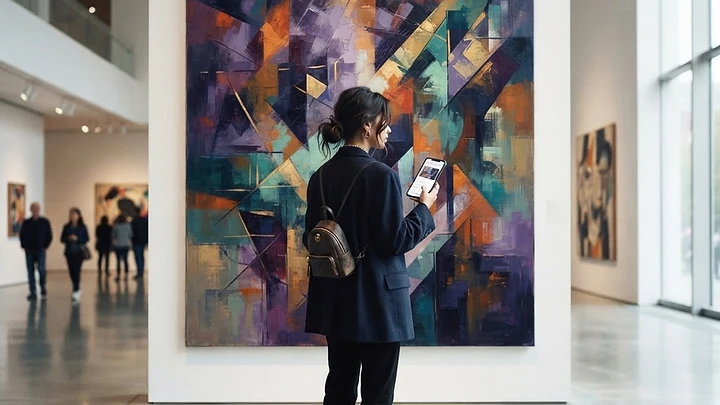
- Contextual Anchoring: Access information immediately when you are physically standing in front of a piece.
- Iterative Review: Revisit challenging modules as often as you need to solidify your understanding.
- Stress-Free Learning: Remove the timeline pressure of exams and rigid homework deadlines.
By integrating art study into your daily routine, you move beyond seeing art as a static object in a textbook. It becomes a dynamic, living subject that grows with you. The 24/7 nature of the platform means the professor is always ready to offer a new perspective or a challenging question, keeping your intellectual curiosity piqued and your critical thinking skills sharp.
Is an AI-based course worth the $5/month investment?
A subscription of $5/month is an exceptionally low-cost investment that provides access to a personalized, world-class educational tool which would otherwise cost thousands in traditional tutoring or college tuition fees. The value is found in the high-fidelity feedback and the sheer volume of content available on demand.
When you compare the cost of this program to formal art history classes, the financial accessibility becomes clear. Traditional university courses often come with heavy overhead, including textbooks, campus fees, and inflexible schedules. By leveraging AI-Adaptive Learning, this course eliminates those barriers. You are not paying for a physical lecture hall or an administrative infrastructure; you are paying directly for the high-quality, synthesized knowledge provided by an AI expert that is always ready to serve you.
Beyond the raw dollar amount, consider the time-value of your investment. Traditional study often involves wasted time commuting or reading irrelevant chapters in a textbook. Because this course is adaptive, you spend your time only on the information that you actually need. Every minute you spend in the platform is optimized for your growth.
The AI professor doesn't get tired, it doesn't get frustrated, and it is capable of holding the entire canon of Western and Eastern art history in its 'mind' at once. This depth of knowledge is effectively infinite, meaning that even after months of daily use, you will still be discovering new angles and insights.
Reflect on these comparisons to understand the value proposition:
- Efficiency: Focus only on what you don't know, avoiding redundant review.
- Scalability: Access everything from cave paintings to contemporary digital art.
- Consistency: Receive the same high level of engagement every time you log in.
- Longevity: Keep the subscription as long as you want to continue your growth.
Ultimately, the value is defined by what you do with this newfound perspective. As you become more visually literate, your engagement with the world around you changes. You begin to notice the artistic choices in cinema, architecture, and even advertisements. This $5 monthly fee acts as a key that unlocks a lifelong habit of aesthetic appreciation and intellectual refinement, which is an intangible asset that pays dividends in your personal satisfaction and quality of life for years to come.

By the numbers
The picture at a glance.
Learning Efficiency Gains
Students utilizing AI-adaptive systems report a significant reduction in time spent on redundant materials compared to traditional methods.
Accessibility and Cost
The AI Art Appreciation Professor provides continuous, affordable access to high-level expertise at a fraction of traditional costs.
Side by side
How the options compare.
Educational Method Comparison
| Method | Customization | Cost | Availability |
|---|---|---|---|
| AI Professor | High (Adaptive) | $5/mo | 24/7 |
| Live Tutor | Medium | $50+/hr | Limited |
| Art Textbook | Low | $100+ | Always |
| University | Low | $1000+ | Semester |
Learning Outcomes Overview
| Goal | AI Professor | Traditional Class |
|---|---|---|
| Visual Literacy | High Focus | Varies |
| Personal Pace | Unlimited | Fixed |
| Feedback Loop | Immediate | Delayed |
| Curriculum | Tailored | Standardized |
The data
What the numbers look like.
Monthly Cost Comparison
Comparing the monthly expense of different educational options shows the distinct affordability of AI-driven platforms.
USD per month
Retention Rates Over Time
AI-adaptive learning supports higher long-term retention by focusing on personalized engagement rather than passive memorization.
Knowledge Retention (%)
Enrol
Start today.
AI Art Appreciation Professor is taught by an AI professor that adapts to what you already know, available 24/7, from $5/month.