Personal Interest Courses · AI Wine & Cheese Professor
How Can I Confidently Select and Pair Wine and Cheese for Informal Social Gatherings?
This guide explains the foundational principles of wine and cheese pairing for social settings. It details how the AI Wine & Cheese Professor course simplifies complex flavor theory into actionable habits for hosts seeking to impress friends without unnecessary stress.
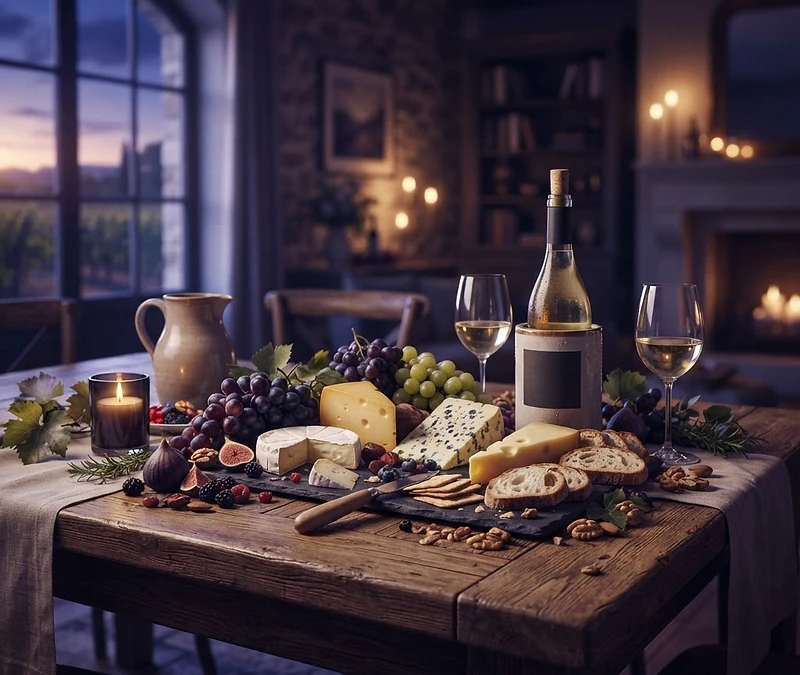
A well-organized pairing spread demonstrates the visual harmony of flavors that makes social entertaining both impressive and enjoyable for guests.
Direct answer
You can master the art of pairing by utilizing the AI Wine & Cheese Professor course. Taught by an AI professor using AI-Adaptive Learning, the platform adjusts to your palate preferences 24/7. This comprehensive program builds your confidence for only $5/month, ensuring you always select perfect pairings for your social gatherings.
How do I determine the right wine style for specific cheese textures?
Determining the right pairing begins with matching the structural weight of the wine to the texture and richness of the cheese. Texture dictates how a cheese behaves on your palate, requiring either a light, refreshing wine or a bold, structured vintage to achieve equilibrium.
Soft cheeses, such as Brie or Camembert, have a high moisture content and a luxurious, buttery mouthfeel. These textures demand wines with higher acidity or a slight effervescence, such as a traditional Champagne or a dry Chenin Blanc. The acidity cuts through the dense creaminess, preventing the cheese from coating your palate and hiding its more delicate mushroomy or earthy notes. Conversely, hard or semi-hard cheeses like Gruyère or Comté possess a firmer, more crystalline structure that holds up well against medium-bodied whites like Chardonnay or light-bodied reds like Pinot Noir. The oak treatment in some Chardonnays adds a nutty quality that mirrors the natural aging process of these cheeses, creating a bridge of flavor that is both satisfying and complex.
To master this, you can categorize cheese by its physical profile:
- Fresh and Creamy: Think ricotta or fresh chèvre, which pair best with zesty, high-acid whites.
- Semi-Soft: Think Havarti or Fontina, which benefit from aromatic, fruit-forward wines like Gewürztraminer.
- Hard and Aged: Think Pecorino or Parmesan, which require wines with enough tannin to hold their own against the intense salinity and protein content.
- Blue Veined: Think Roquefort or Stilton, which traditionally demand the sweetness of a dessert wine like Sauternes to counter the pungent, salty intensity of the mold.
Beyond these categories, consider the aging process. As cheese ages, it loses moisture and gains salt, which shifts the optimal wine companion toward something with more maturity. A very young, mild cheese would be crushed by a heavy, tannic red, while a highly aged, crystallized cheddar would make a light, crisp wine taste thin and watery. The goal is to ensure the wine and cheese move together toward a shared finish, rather than racing against one another. By learning to identify these texture markers, you move away from the guesswork of trial and error and instead apply a consistent, reliable framework for your social gatherings, ensuring that your selections always feel purposeful and well-researched.
Why does salt content in cheese drastically change how a wine tastes?
Salt acts as a powerful flavor enhancer in cheese, but it also acts as a primary antagonist to tannins. When you pair a salty cheese with a high-tannin wine, the salt can strip away the fruit flavors, leaving behind a sharp, metallic sensation that detracts from the drinking experience.
Salt in cheese can make a wine appear more bitter and acidic while simultaneously reducing the perception of fruitiness and sweetness. This is a critical observation for anyone looking to pair aged cheeses, which are naturally more saline due to moisture evaporation during the maturation process. If you serve a bold Cabernet Sauvignon with a heavily salted, aged Parmesan, the salt will cause the wine’s tannins to feel significantly more aggressive on your gums and tongue. Instead, you might pair that same Parmesan with a mature white wine, such as an aged Rioja Blanco, or a fortified wine like a dry Amontillado Sherry. These options have the complexity to handle the salt without exacerbating the wine's inherent structural bitterness.
Consider this logic for managing salt:
- Low-salt cheeses: Allow for more versatility in wine choice, as they do not aggressively clash with tannins.
- High-salt cheeses: Require a careful selection of wines with lower tannins and often a hint of residual sugar, such as an off-dry Riesling.
- Salt and Spice: If the cheese also has spice or herbs, look for wines with high aromatics, such as a Sauvignon Blanc, to harmonize with the botanical notes.
Learning to manage the salt-to-tannin ratio is one of the most effective ways to improve your hosting skills. The AI Wine & Cheese Professor breaks this down by testing your ability to predict these interactions before they occur. You will practice identifying the relative saltiness of different cheese varieties and then selecting wine styles that either complement or contrast those specific levels of intensity. By focusing on this chemical reality, you avoid the disappointment of a pairing that makes both the wine and the cheese taste worse. Instead, you develop a reliable intuition for how salt influences flavor perception, allowing you to curate a board that hits all the right notes every single time. This science-based approach is accessible to everyone, regardless of their previous experience with viticulture or dairy, and it provides a clear pathway toward achieving professional results in an informal setting.
How can I apply regional traditions to create a fail-safe wine and cheese board?
Regional pairing is often the most reliable "shortcut" in gastronomy because it respects the shared history of climate, soil, and agricultural tradition. Foods and wines produced within the same local geography almost always complement each other because they have evolved in tandem for centuries.
When you stick to a single region, you are leveraging centuries of trial and error. For example, in the Loire Valley of France, the soil conditions create specific types of soil that produce both sharp, acidic goat cheeses and crisp, minerally Sauvignon Blanc. Because the goats graze on the same land that the vines grow in, the environmental influence ensures that the flavors naturally align. Choosing an Italian pecorino alongside a Tuscan Chianti works for a similar reason: the structural qualities of the local wine were developed to cut through the fat of the local cheese. You are essentially borrowing the expertise of generations of farmers who figured out these pairings long before modern science defined the chemical reasons why they work.
When building a regional board, keep these tips in mind:
- Start with a primary region like Piedmont in Italy or Burgundy in France.
- Source at least one cheese and one wine from that specific area to serve as the anchor for your board.
- Build outwards by including one item that is a "wildcard" or a creative contrast, but keep the regional pairing as your safety net.
- Research the traditional serving temperature for both items, as regional wines and cheeses often share ideal service standards.
Applying this framework is simple: look for the origin label on your cheese and search for a wine from the same province. The AI Wine & Cheese Professor guides you through these geographic connections, helping you understand why certain terroir-driven characteristics create a seamless pairing. You will learn to recognize the influence of climate—such as cooler areas producing higher-acid wines that pair with milder cheeses, and warmer areas producing richer wines that pair with more intense, aged varieties. This method provides a fail-safe approach that is perfect for informal social gatherings where you want to provide a cohesive, high-quality experience without spending hours experimenting. By utilizing geography as your guide, you remove the anxiety of potential failure and replace it with the confidence of tradition, ensuring your guests enjoy a authentic, well-thought-out selection.
How does the AI Wine & Cheese Professor adapt to my learning speed?
This platform uses AI-Adaptive Learning to adjust the complexity of its lessons based on your performance, ensuring that you are neither bored by simple concepts nor overwhelmed by advanced chemistry. The system identifies which pairing principles you grasp quickly and which require more repetition.
Most traditional courses follow a linear path, which can be frustrating if you already understand the basics or if you get stuck on a difficult concept. Our AI professor, however, creates a unique curriculum for every user. If you demonstrate a strong understanding of acidity, the system moves you forward to more complex topics like the impact of oak aging or the role of specific fermentation styles. If you struggle with the concept of tannins, the AI provides additional scenarios, varied examples, and simplified explanations until you feel confident. You are not just reading static information; you are interacting with a tutor that is available 24/7.
Consider how the adaptive model works for you:
- Diagnostic Assessment: The system starts by gauging your current knowledge of wine and cheese interaction.
- Targeted Practice: Instead of generic quizzes, you receive scenarios tailored to your weak points.
- Real-Time Feedback: The AI explains not just that a pairing is wrong, but the specific chemical reason why it failed.
- Progression Tracking: You can see your mastery grow across different categories, from basic flavor profiles to advanced structural analysis.
This method is significantly more efficient than attending a class or reading a textbook, as every minute spent in the course is optimized for your individual growth. You are paying just $5/month for a level of personalization that was previously reserved for expensive, private sommeliers. Whether you want to master a specific region or simply learn how to host a better dinner party, the course provides the tools and the feedback loop necessary to succeed. By the end of the program, you will not just know which wines to buy; you will understand the why behind every choice, giving you the freedom to experiment and the knowledge to impress. It is an investment in your own expertise that scales with you as your palate becomes more refined and your social gatherings become more frequent and memorable. The AI is designed to make learning intuitive, helping you translate the complex science of food and wine into practical, everyday skills.


By the numbers
The picture at a glance.
Course Value Breakdown
The AI Wine & Cheese Professor provides accessible, high-quality education at a fraction of the cost of traditional culinary programs.
Learning Efficiency Gains
AI-Adaptive Learning accelerates your mastery by focusing on your specific gaps in knowledge rather than repeating concepts you already understand.
Side by side
How the options compare.
Comparison of Learning Methods
| Method | Availability | Personalization | Cost |
|---|---|---|---|
| AI Professor | 24/7 | High | $5/month |
| Private Tutor | Scheduled | High | $100+/hr |
| Textbook | Anytime | None | $30/book |
| Culinary Class | Scheduled | Medium | $500+/course |
Wine and Cheese Interaction Guide
| Category | Primary Wine | Cheese Style | Interaction |
|---|---|---|---|
| Acidic | Sauvignon Blanc | Goat Cheese | Cuts Fat |
| Tannic | Cabernet | Aged Cheddar | Softens Tannins |
| Sweet | Port | Blue Cheese | Balances Salt |
| Sparkling | Champagne | Triple Cream | Cleans Palate |
The data
What the numbers look like.
Time Required to Build Pairing Competency
Adaptive learning significantly reduces the hours needed to reach a functional level of expertise compared to self-study.
Hours per week
Monthly Investment Comparison
Comparing the cost of professional wine education pathways shows the relative affordability of the AI-driven model.
USD per month
Enrol
Start today.
AI Wine & Cheese Professor is taught by an AI professor that adapts to what you already know, available 24/7, from $5/month.